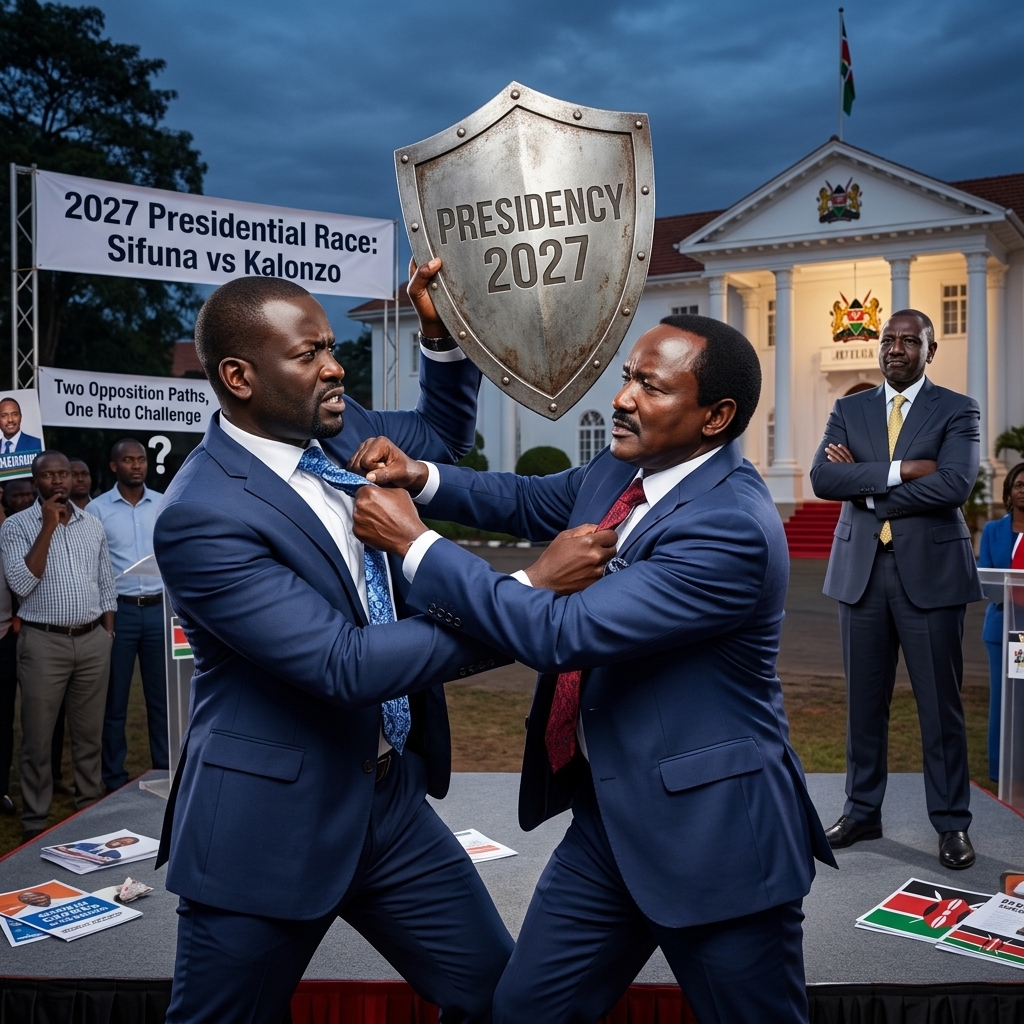

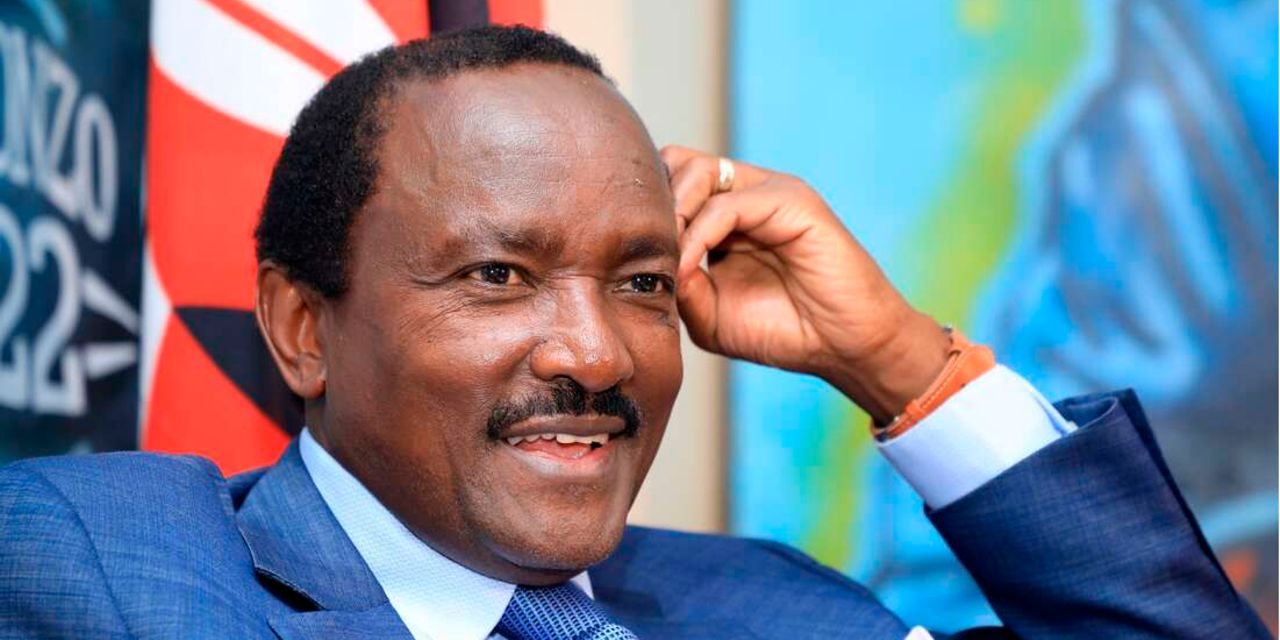

Kenya’s 2027 presidential contest is beginning to take a clearer shape, but the opposition is still facing a fundamental question: will it rally behind one presidential candidate, or will competing formations take separate paths?
The latest development is significant. On September 26, 2026, Linda Mwananchi principals formally settled on Nairobi Senator Edwin Sifuna as the movement’s leader and presidential candidate.
At the same time, Kalonzo Musyoka and his allies are building a separate opposition structure, with the rebranded Ukombozi Alliance and discussions around a broader coalition. The dispute over the Ukombozi name has become a visible sign of the competition between the two camps.
This creates two possible scenarios for 2027.
Scenario One: The Sifuna-led Linda Mwananchi route
Sifuna represents a relatively new political proposition at the presidential level.
His advantage within this scenario is the coalition he is building around Linda Mwananchi. The movement has attracted figures from different regions, including Trans Nzoia Governor George Natembeya and leaders from Western Kenya. Reports have also indicated attempts to bring together politicians associated with different opposition factions.
There is also evidence of an attempt to position Sifuna beyond the traditional ODM/Nyanza political base.
But there is an important weakness: the movement is still building its political machinery.
The disagreement over which party Sifuna should use illustrates the problem. Some leaders have favoured Mwananchi Party, while others have pushed Ukombozi as the political vehicle.
That means Sifuna's presidential candidacy may be settled politically, while the organisational infrastructure around it is still developing.
The question therefore is not simply whether Sifuna can attract crowds.
It is whether Linda Mwananchi can transform that mobilisation into a nationwide electoral organisation capable of competing in all regions and at every level of the ballot.
Scenario Two: The Kalonzo-led opposition route
Kalonzo comes into the race with a very different political profile.
He has presidential experience, an established party structure through Wiper, and longstanding relationships with opposition politicians.
His camp is also attempting to consolidate several parties under the Ukombozi Alliance. However, the Ukombozi name itself has become contested. The Registrar of Political Parties has been presented with competing claims involving the Ukombozi Alliance and Ukombozi People's Party.
The bigger issue is therefore not the name.
It is who controls the opposition coalition and who gets the presidential ticket.
There have already been discussions around a possible Kalonzo-Sifuna arrangement. Earlier reporting indicated that some opposition actors were considering Kalonzo and Sifuna on the same ticket, although the two camps have subsequently moved toward separate political vehicles.
This creates a fascinating contrast.
Kalonzo brings an established political network.
Sifuna brings a newer mobilisation effort and a younger political profile.
Neither scenario, however, automatically translates into a nationwide presidential coalition.
And then there is William Ruto
The opposition's calculations cannot be separated from the structure being assembled around President William Ruto.
Ruto won the 2022 presidential election with 7,176,141 votes, or 50.49 per cent, against Raila Odinga's 6,942,930 votes.
For 2027, the political landscape is different.
Most importantly, ODM under Oburu Oginga has publicly committed to working with Ruto and UDA toward the 2027 election, including discussions on a joint manifesto and coalition arrangements.
That changes the arithmetic for the opposition.
In 2022, Raila's campaign had ODM and a large opposition coalition behind it. In 2027, a significant section of the ODM establishment is instead working with Ruto.
So Sifuna is not simply trying to inherit Raila's former opposition constituency.
He is trying to reassemble part of it while expanding into constituencies outside it.
The real contest: Sifuna alone vs Kalonzo alone
This is where the two scenarios become particularly important.
Issue Sifuna/Linda Mwananchi Kalonzo/Ukombozi Alliance
Political profile Newer presidential contender Experienced presidential contender
Main political asset Linda Mwananchi mobilisation Established opposition networks
Youth appeal Central to his emerging political identity Less centred on youth mobilisation
Western Kenya Natembeya and other allies provide an important connection Wamalwa and other Western leaders provide established links
Eastern Kenya Needs stronger consolidation Kalonzo has an established base
Nyanza Potential access through ODM breakaway politics Established opposition relationships
Mt Kenya Still needs substantial coalition-building Requires alliances with Mt Kenya leaders
Party machinery Still being constructed/reorganised More established
Main challenge Turning momentum into national organisation Rebuilding a broad coalition around a single ticket
Biggest unresolved question Can Linda Mwananchi expand beyond its current coalition? Can Kalonzo bring competing opposition leaders under one ticket?
The table illustrates something important: neither candidate's individual political profile answers the national coalition question.
Kenya's presidential elections are not won through one region or one political movement.
The third factor: Mt Kenya and Western Kenya
These two regions could become particularly important to the opposition's calculations.
Western Kenya has several competing political centres, including Sifuna allies, Wamalwa, Natembeya and other local political actors.
Mt Kenya presents an even more complicated picture because opposition actors are attempting to build relationships with leaders who have their own presidential or coalition ambitions.
The opposition therefore faces a coordination problem:
Who gives up what?
Who gets the presidential ticket?
Who becomes running mate?
Which party gets which seats?
Which regions are allocated which candidates?
And perhaps most importantly, can all these politicians campaign for one presidential candidate without simultaneously campaigning against each other at the local level?
The answers could matter more than the slogans being used by the various coalitions.
So, can either Sifuna or Kalonzo challenge Ruto separately?
The current evidence does not provide a sound basis for declaring either candidate capable or incapable of defeating Ruto in 2027. The election is still ahead, and the opposition's final coalition arrangements, candidates and campaign structures have not been settled.
What can be said from the present political configuration is this:
A Sifuna-alone scenario
Sifuna would have to convert Linda Mwananchi from a political movement into a nationwide electoral machine, consolidate Western Kenya, build meaningful support outside his strongest networks and attract additional established politicians without losing the identity that has driven his rise.
A Kalonzo-alone scenario
Kalonzo would have to consolidate the established opposition parties, resolve competing ambitions among coalition leaders and build a coalition that reaches beyond his traditional political networks.
A united-opposition scenario
This would be a fundamentally different political equation.
A coalition bringing together Sifuna, Kalonzo, Western Kenya leaders, Mt Kenya opposition figures and other presidential contenders would have a different geographical and organisational structure from either candidate running separately.
But even that would not guarantee an electoral victory. It would simply create a broader political coalition whose actual strength would depend on voter mobilisation, candidate selection, regional alliances, campaign organisation and the issues voters prioritise in 2027.
Conclusion: 2027 may be decided before the campaign officially begins
The most consequential battle right now may not be Sifuna vs Kalonzo.
It may be Sifuna and Kalonzo vs the question of whether the opposition can unite.
Linda Mwananchi has now formally chosen Sifuna. Kalonzo's camp is constructing its own coalition architecture. The Ukombozi dispute demonstrates how quickly disagreements over political vehicles can become disagreements over political leadership. Meanwhile, ODM's current leadership is negotiating a relationship with Ruto and UDA.
That leaves Kenya heading toward a potentially fragmented opposition landscape.
If Sifuna and Kalonzo remain separate, they will be competing not only against Ruto, but potentially against each other for the same opposition voters.
If they eventually negotiate a common structure, the 2027 contest becomes a substantially different political equation.
And that is probably the biggest unresolved question of the 2027 race:
Will the opposition enter the election with one presidential vehicle, or will several vehicles carry different opposition leaders into the same election?
The answer may become clearer as the party registration disputes, coalition negotiations and regional realignments unfold over the coming months.
The latest development is significant. On September 26, 2026, Linda Mwananchi principals formally settled on Nairobi Senator Edwin Sifuna as the movement’s leader and presidential candidate.
At the same time, Kalonzo Musyoka and his allies are building a separate opposition structure, with the rebranded Ukombozi Alliance and discussions around a broader coalition. The dispute over the Ukombozi name has become a visible sign of the competition between the two camps.
This creates two possible scenarios for 2027.
Scenario One: The Sifuna-led Linda Mwananchi route
Sifuna represents a relatively new political proposition at the presidential level.
His advantage within this scenario is the coalition he is building around Linda Mwananchi. The movement has attracted figures from different regions, including Trans Nzoia Governor George Natembeya and leaders from Western Kenya. Reports have also indicated attempts to bring together politicians associated with different opposition factions.
There is also evidence of an attempt to position Sifuna beyond the traditional ODM/Nyanza political base.
But there is an important weakness: the movement is still building its political machinery.
The disagreement over which party Sifuna should use illustrates the problem. Some leaders have favoured Mwananchi Party, while others have pushed Ukombozi as the political vehicle.
That means Sifuna's presidential candidacy may be settled politically, while the organisational infrastructure around it is still developing.
The question therefore is not simply whether Sifuna can attract crowds.
It is whether Linda Mwananchi can transform that mobilisation into a nationwide electoral organisation capable of competing in all regions and at every level of the ballot.
Scenario Two: The Kalonzo-led opposition route
Kalonzo comes into the race with a very different political profile.
He has presidential experience, an established party structure through Wiper, and longstanding relationships with opposition politicians.
His camp is also attempting to consolidate several parties under the Ukombozi Alliance. However, the Ukombozi name itself has become contested. The Registrar of Political Parties has been presented with competing claims involving the Ukombozi Alliance and Ukombozi People's Party.
The bigger issue is therefore not the name.
It is who controls the opposition coalition and who gets the presidential ticket.
There have already been discussions around a possible Kalonzo-Sifuna arrangement. Earlier reporting indicated that some opposition actors were considering Kalonzo and Sifuna on the same ticket, although the two camps have subsequently moved toward separate political vehicles.
This creates a fascinating contrast.
Kalonzo brings an established political network.
Sifuna brings a newer mobilisation effort and a younger political profile.
Neither scenario, however, automatically translates into a nationwide presidential coalition.
And then there is William Ruto
The opposition's calculations cannot be separated from the structure being assembled around President William Ruto.
Ruto won the 2022 presidential election with 7,176,141 votes, or 50.49 per cent, against Raila Odinga's 6,942,930 votes.
For 2027, the political landscape is different.
Most importantly, ODM under Oburu Oginga has publicly committed to working with Ruto and UDA toward the 2027 election, including discussions on a joint manifesto and coalition arrangements.
That changes the arithmetic for the opposition.
In 2022, Raila's campaign had ODM and a large opposition coalition behind it. In 2027, a significant section of the ODM establishment is instead working with Ruto.
So Sifuna is not simply trying to inherit Raila's former opposition constituency.
He is trying to reassemble part of it while expanding into constituencies outside it.
The real contest: Sifuna alone vs Kalonzo alone
This is where the two scenarios become particularly important.
Issue Sifuna/Linda Mwananchi Kalonzo/Ukombozi Alliance
Political profile Newer presidential contender Experienced presidential contender
Main political asset Linda Mwananchi mobilisation Established opposition networks
Youth appeal Central to his emerging political identity Less centred on youth mobilisation
Western Kenya Natembeya and other allies provide an important connection Wamalwa and other Western leaders provide established links
Eastern Kenya Needs stronger consolidation Kalonzo has an established base
Nyanza Potential access through ODM breakaway politics Established opposition relationships
Mt Kenya Still needs substantial coalition-building Requires alliances with Mt Kenya leaders
Party machinery Still being constructed/reorganised More established
Main challenge Turning momentum into national organisation Rebuilding a broad coalition around a single ticket
Biggest unresolved question Can Linda Mwananchi expand beyond its current coalition? Can Kalonzo bring competing opposition leaders under one ticket?
The table illustrates something important: neither candidate's individual political profile answers the national coalition question.
Kenya's presidential elections are not won through one region or one political movement.
The third factor: Mt Kenya and Western Kenya
These two regions could become particularly important to the opposition's calculations.
Western Kenya has several competing political centres, including Sifuna allies, Wamalwa, Natembeya and other local political actors.
Mt Kenya presents an even more complicated picture because opposition actors are attempting to build relationships with leaders who have their own presidential or coalition ambitions.
The opposition therefore faces a coordination problem:
Who gives up what?
Who gets the presidential ticket?
Who becomes running mate?
Which party gets which seats?
Which regions are allocated which candidates?
And perhaps most importantly, can all these politicians campaign for one presidential candidate without simultaneously campaigning against each other at the local level?
The answers could matter more than the slogans being used by the various coalitions.
So, can either Sifuna or Kalonzo challenge Ruto separately?
The current evidence does not provide a sound basis for declaring either candidate capable or incapable of defeating Ruto in 2027. The election is still ahead, and the opposition's final coalition arrangements, candidates and campaign structures have not been settled.
What can be said from the present political configuration is this:
A Sifuna-alone scenario
Sifuna would have to convert Linda Mwananchi from a political movement into a nationwide electoral machine, consolidate Western Kenya, build meaningful support outside his strongest networks and attract additional established politicians without losing the identity that has driven his rise.
A Kalonzo-alone scenario
Kalonzo would have to consolidate the established opposition parties, resolve competing ambitions among coalition leaders and build a coalition that reaches beyond his traditional political networks.
A united-opposition scenario
This would be a fundamentally different political equation.
A coalition bringing together Sifuna, Kalonzo, Western Kenya leaders, Mt Kenya opposition figures and other presidential contenders would have a different geographical and organisational structure from either candidate running separately.
But even that would not guarantee an electoral victory. It would simply create a broader political coalition whose actual strength would depend on voter mobilisation, candidate selection, regional alliances, campaign organisation and the issues voters prioritise in 2027.
Conclusion: 2027 may be decided before the campaign officially begins
The most consequential battle right now may not be Sifuna vs Kalonzo.
It may be Sifuna and Kalonzo vs the question of whether the opposition can unite.
Linda Mwananchi has now formally chosen Sifuna. Kalonzo's camp is constructing its own coalition architecture. The Ukombozi dispute demonstrates how quickly disagreements over political vehicles can become disagreements over political leadership. Meanwhile, ODM's current leadership is negotiating a relationship with Ruto and UDA.
That leaves Kenya heading toward a potentially fragmented opposition landscape.
If Sifuna and Kalonzo remain separate, they will be competing not only against Ruto, but potentially against each other for the same opposition voters.
If they eventually negotiate a common structure, the 2027 contest becomes a substantially different political equation.
And that is probably the biggest unresolved question of the 2027 race:
Will the opposition enter the election with one presidential vehicle, or will several vehicles carry different opposition leaders into the same election?
The answer may become clearer as the party registration disputes, coalition negotiations and regional realignments unfold over the coming months.