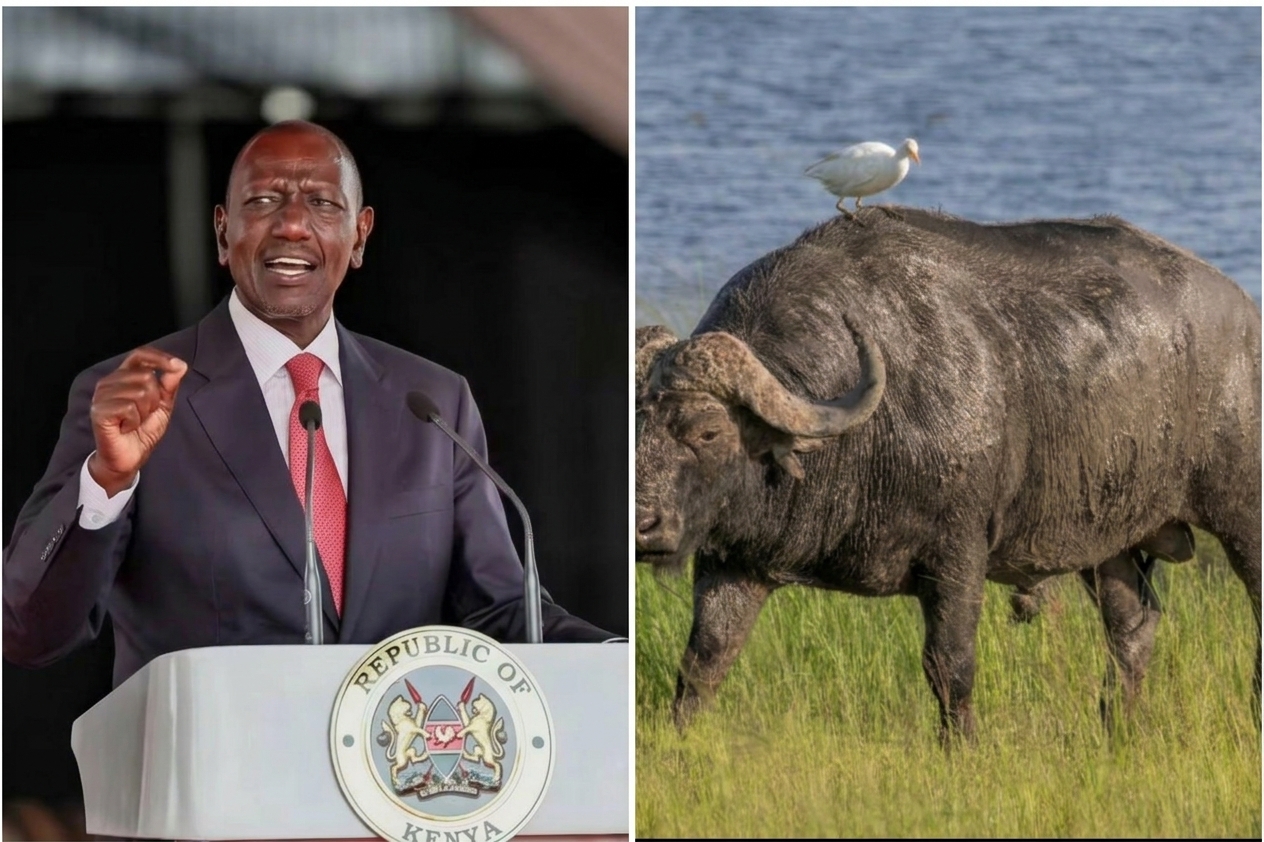
Buffalo Milk or Presidential Banter? Ruto’s Milk Remarks Leave Kenyans Asking Questions
Was President William Ruto serious about buffalo milk, or has Kenya’s milk debate taken an unexpected turn?
Sometimes, a statement from State House is enough to turn an ordinary day into a national conversation. President William Ruto’s recent remarks about milk have done exactly that, leaving Kenyans debating whether he was presenting a serious agricultural idea or offering material for the next round of political jokes.
As reactions, jokes and memes spread, one question remains: was the President joking, or should Kenyans take his proposal seriously?
When Milk Becomes a National Debate
Milk is not an unfamiliar subject in Kenya. It is part of everyday life, a source of income for thousands of dairy farmers and an important component of the country's agricultural economy.
That is why the President’s remarks attracted so much attention. Discussions about alternative milk sources, including buffalo and camel milk, may sound unusual to consumers accustomed to cow's milk. But the idea of diversifying livestock production is not inherently absurd.
Different animals thrive under different environmental conditions. Camels, for example, are well adapted to arid and semi-arid regions, making camel milk an area worth exploring in counties where conventional dairy farming faces challenges from water scarcity and unreliable pasture.
Buffalo dairy farming, meanwhile, would require careful assessment of breeding, animal management, feed, infrastructure, processing and market demand before any large-scale investment could be justified.
The real question is not whether these ideas sound funny. It is whether they make economic and agricultural sense for Kenya.
Was the President Serious or Just Being Funny?
Political leaders sometimes make statements that the public interprets differently from how they were intended. A proposal can attract laughter without necessarily being a joke.
The available reporting indicates that Ruto was discussing diversification of milk production, including exploring buffalo and camel milk. However, raising an idea should not be confused with announcing a fully funded or implemented government programme.
If the proposal is serious, Kenyans deserve to understand the plan behind it. Has the government assessed the costs? Is there evidence of sufficient consumer demand? Which farmers would benefit? How would the government support production, processing and distribution?
These are practical questions that can turn an unusual proposal into a meaningful agricultural policy discussion.
But What About the Cost of Milk?
While Kenyans debate buffalo milk, the more immediate concern for many households is the cost of putting ordinary food on the table.
For dairy farmers, production costs matter. Animal feeds, veterinary services, transport, electricity and processing all influence the price consumers eventually pay.
Introducing a new source of milk would not automatically make milk cheaper. A new dairy industry requires investment, reliable supply chains, quality controls and willing buyers.
If the objective is to make milk more affordable, the government must explain how diversification would help achieve that goal and how quickly consumers could expect to see any benefits.
Otherwise, the conversation risks becoming about the novelty of buffalo milk rather than the economics of dairy farming.
There Is Also an Environmental Question
As Kenya confronts drought, water scarcity and changing weather patterns, livestock policy cannot be separated from environmental sustainability.
Dairy farming depends on reliable water supplies, pasture and animal feed. When drought destroys pasture or raises feed prices, farmers face higher costs and reduced productivity.
Camel farming may offer opportunities in some dryland communities, but it is not a universal solution. Buffalo farming also comes with specific requirements that must be evaluated against local conditions.
A sound agricultural strategy should consider which livestock systems are best suited to different regions, how much water and feed they require, and whether farmers can maintain production without placing additional pressure on already stressed ecosystems.
That is where the discussion becomes more important than the jokes.
Kenyans Deserve More Than a Viral Statement
There is nothing wrong with questioning a presidential proposal. Equally, there is value in examining an unconventional idea before dismissing it.
The responsibility of government is to explain its proposals, provide evidence and demonstrate how public policy will improve people's lives. If buffalo or camel milk could create new markets, strengthen pastoralist livelihoods or diversify dairy production, the government should present the research and implementation plan.
If the idea is impractical or too expensive, that too should become clear through evidence.
Ultimately, Kenyans should not have to guess whether a major policy statement is banter or a serious commitment.
So, Mr President, is buffalo milk part of Kenya’s agricultural future or is this a conversation that will disappear once the jokes stop trending?
The country is waiting for more than a punchline. It is waiting to see the plan.
Was President William Ruto serious about buffalo milk, or has Kenya’s milk debate taken an unexpected turn?
Sometimes, a statement from State House is enough to turn an ordinary day into a national conversation. President William Ruto’s recent remarks about milk have done exactly that, leaving Kenyans debating whether he was presenting a serious agricultural idea or offering material for the next round of political jokes.
As reactions, jokes and memes spread, one question remains: was the President joking, or should Kenyans take his proposal seriously?
When Milk Becomes a National Debate
Milk is not an unfamiliar subject in Kenya. It is part of everyday life, a source of income for thousands of dairy farmers and an important component of the country's agricultural economy.
That is why the President’s remarks attracted so much attention. Discussions about alternative milk sources, including buffalo and camel milk, may sound unusual to consumers accustomed to cow's milk. But the idea of diversifying livestock production is not inherently absurd.
Different animals thrive under different environmental conditions. Camels, for example, are well adapted to arid and semi-arid regions, making camel milk an area worth exploring in counties where conventional dairy farming faces challenges from water scarcity and unreliable pasture.
Buffalo dairy farming, meanwhile, would require careful assessment of breeding, animal management, feed, infrastructure, processing and market demand before any large-scale investment could be justified.
The real question is not whether these ideas sound funny. It is whether they make economic and agricultural sense for Kenya.
Was the President Serious or Just Being Funny?
Political leaders sometimes make statements that the public interprets differently from how they were intended. A proposal can attract laughter without necessarily being a joke.
The available reporting indicates that Ruto was discussing diversification of milk production, including exploring buffalo and camel milk. However, raising an idea should not be confused with announcing a fully funded or implemented government programme.
If the proposal is serious, Kenyans deserve to understand the plan behind it. Has the government assessed the costs? Is there evidence of sufficient consumer demand? Which farmers would benefit? How would the government support production, processing and distribution?
These are practical questions that can turn an unusual proposal into a meaningful agricultural policy discussion.
But What About the Cost of Milk?
While Kenyans debate buffalo milk, the more immediate concern for many households is the cost of putting ordinary food on the table.
For dairy farmers, production costs matter. Animal feeds, veterinary services, transport, electricity and processing all influence the price consumers eventually pay.
Introducing a new source of milk would not automatically make milk cheaper. A new dairy industry requires investment, reliable supply chains, quality controls and willing buyers.
If the objective is to make milk more affordable, the government must explain how diversification would help achieve that goal and how quickly consumers could expect to see any benefits.
Otherwise, the conversation risks becoming about the novelty of buffalo milk rather than the economics of dairy farming.
There Is Also an Environmental Question
As Kenya confronts drought, water scarcity and changing weather patterns, livestock policy cannot be separated from environmental sustainability.
Dairy farming depends on reliable water supplies, pasture and animal feed. When drought destroys pasture or raises feed prices, farmers face higher costs and reduced productivity.
Camel farming may offer opportunities in some dryland communities, but it is not a universal solution. Buffalo farming also comes with specific requirements that must be evaluated against local conditions.
A sound agricultural strategy should consider which livestock systems are best suited to different regions, how much water and feed they require, and whether farmers can maintain production without placing additional pressure on already stressed ecosystems.
That is where the discussion becomes more important than the jokes.
Kenyans Deserve More Than a Viral Statement
There is nothing wrong with questioning a presidential proposal. Equally, there is value in examining an unconventional idea before dismissing it.
The responsibility of government is to explain its proposals, provide evidence and demonstrate how public policy will improve people's lives. If buffalo or camel milk could create new markets, strengthen pastoralist livelihoods or diversify dairy production, the government should present the research and implementation plan.
If the idea is impractical or too expensive, that too should become clear through evidence.
Ultimately, Kenyans should not have to guess whether a major policy statement is banter or a serious commitment.
So, Mr President, is buffalo milk part of Kenya’s agricultural future or is this a conversation that will disappear once the jokes stop trending?
The country is waiting for more than a punchline. It is waiting to see the plan.