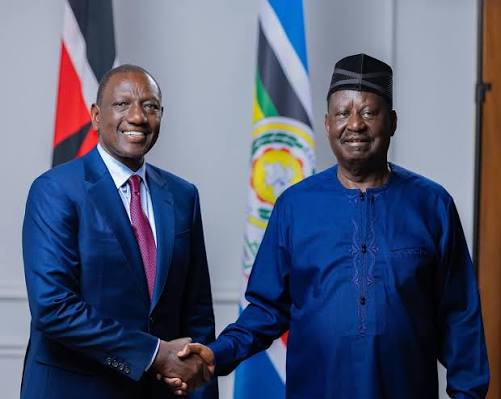

President William Ruto has once again invoked the political partnership he formed with the late Raila Odinga, this time while defending the government’s agenda on affordable housing, universal health coverage and the controversial 10-point agreement between the Kenya Kwanza administration and ODM.
Ruto said that when he and Raila discussed matters of affordable housing and universal health coverage, the former ODM leader agreed with him.
He went further.
According to the President, even the 10-point agenda signed between Kenya Kwanza and ODM was not foreign to Raila’s political thinking. Ruto said all ten points were “part and parcel” of Azimio la Umoja’s 2022 manifesto.
On the surface, it is a powerful political argument.
But there is one uncomfortable problem.
Raila Odinga is no longer here to confirm it.
And that leaves Kenyans with a question that cannot easily be answered.
When two politicians agree, what exactly did they agree on?
Political negotiations are rarely as simple as public statements make them appear.
Two leaders can agree on a policy objective but disagree fundamentally on how it should be implemented.
They can agree that affordable housing is necessary but disagree over financing, taxation, land, construction or who should benefit.
They can agree that universal healthcare is important but have completely different ideas about how the system should be funded and administered.
And they can sign a political agreement while interpreting its purpose differently.
So when President Ruto says Raila agreed with him, the question is not necessarily whether the two men ever agreed.
They almost certainly agreed on some things.
The more important question is:
What exactly did Raila agree to?
Raila's manifesto is now part of the debate
Ruto's statement about the 10-point agenda being contained in Azimio's 2022 manifesto introduces another fascinating dimension.
If the policies contained in the Kenya Kwanza-ODM agreement were already part of Azimio's manifesto, then the President has a legitimate political argument to make.
It would mean that at least some of the policies being pursued by his administration were not simply Kenya Kwanza inventions.
They were policies that Raila and the Azimio coalition had also presented to voters.
But there is another side to the question.
A manifesto is a political promise.
An agreement between political parties is something else.
And government implementation is something else entirely.
The existence of a policy in a manifesto does not automatically establish that the two leaders agreed on every detail of its implementation.
That distinction matters.
The problem with political history after death
There is something uniquely difficult about politics after a major political figure dies.
The dead cannot hold a press conference.
They cannot release a clarification.
They cannot appear on television and say, “That is not what I meant.”
They cannot challenge another politician's recollection of a private conversation.
And they cannot explain why they signed an agreement or what they believed they were getting in return.
That leaves history in the hands of the living.
And the living have political interests.
This is not an accusation against President Ruto.
It is simply a reality of political succession.
Whenever a deceased political leader is invoked to validate a current government's position, the public must inevitably rely on surviving participants, documents, recordings and contemporaneous statements.
Did Raila support Ruto's agenda or negotiate around it?
This is where the story becomes particularly interesting.
Raila's decision to work with Ruto after years of political rivalry was one of the biggest political developments in Kenya's recent history.
Their cooperation was presented as an effort to address issues affecting ordinary Kenyans.
The 10-point agenda touched on issues including the cost of living, electoral reforms, governance, national unity and other areas of public concern.
But cooperation between political rivals does not necessarily mean ideological conversion.
Raila could agree with Ruto on certain policies without becoming a Kenya Kwanza politician.
He could support affordable housing while disagreeing with how it was being implemented.
He could support universal healthcare while questioning the financing model.
He could support national dialogue while maintaining his political independence.
That is the complexity of political agreements.
And now comes the 2027 question
Ruto's reference to Raila is not occurring in a political vacuum.
Kenya is moving towards another General Election.
The political alliances that were unthinkable only a few years ago are now being discussed as possible foundations for the next election.
That makes the memory of Raila politically valuable.
If Ruto can demonstrate that the policies of his administration were also supported by Raila, he strengthens the argument that the government's agenda was not merely a Kenya Kwanza project.
It also gives the administration a way of presenting its relationship with ODM as a continuation of something Raila himself helped negotiate.
But that inevitably raises another question:
Would Raila have endorsed everything the government is doing today?
We will never know with certainty.
And that is precisely the problem.
Documents can speak where politicians cannot
There is, however, one way to reduce the uncertainty.
Documents.
If the President says Raila agreed with him, Kenyans can examine the agreements.
If the government says the 10-point agenda came from ideas contained in Azimio's manifesto, Kenyans can compare the documents.
If there were minutes of meetings, correspondence, policy papers or written commitments between the two sides, those documents can help establish what was actually agreed.
That is far more reliable than political recollection.
Because politicians remember negotiations differently.
And sometimes, political memory conveniently remembers what today's politics requires.
So, who should Kenyans believe?
Should Kenyans accept President Ruto's recollection that Raila agreed with him?
Should they look at the 2022 Azimio manifesto and determine whether the President's claim is accurate?
Should they examine the 10-point agreement and judge whether it genuinely reflects Raila's political programme?
Or should they remain sceptical whenever the words of a deceased politician are used to justify a political position that he cannot personally explain?
There is no easy answer.
One thing, however, is certain:
Dead men do not speak.
And because Raila cannot stand before Kenyans today and tell us what he actually agreed to, perhaps the responsibility now falls on the living to produce the evidence.
Not political interpretation.
Not selective memories.
Not convenient quotations.
The documents.
So, dear reader, here is the question:
Do you believe President William Ruto is accurately presenting what Raila Odinga agreed to or are we now being asked to interpret the political intentions of a man who can no longer speak for himself?
You decide.
Ruto said that when he and Raila discussed matters of affordable housing and universal health coverage, the former ODM leader agreed with him.
He went further.
According to the President, even the 10-point agenda signed between Kenya Kwanza and ODM was not foreign to Raila’s political thinking. Ruto said all ten points were “part and parcel” of Azimio la Umoja’s 2022 manifesto.
On the surface, it is a powerful political argument.
But there is one uncomfortable problem.
Raila Odinga is no longer here to confirm it.
And that leaves Kenyans with a question that cannot easily be answered.
When two politicians agree, what exactly did they agree on?
Political negotiations are rarely as simple as public statements make them appear.
Two leaders can agree on a policy objective but disagree fundamentally on how it should be implemented.
They can agree that affordable housing is necessary but disagree over financing, taxation, land, construction or who should benefit.
They can agree that universal healthcare is important but have completely different ideas about how the system should be funded and administered.
And they can sign a political agreement while interpreting its purpose differently.
So when President Ruto says Raila agreed with him, the question is not necessarily whether the two men ever agreed.
They almost certainly agreed on some things.
The more important question is:
What exactly did Raila agree to?
Raila's manifesto is now part of the debate
Ruto's statement about the 10-point agenda being contained in Azimio's 2022 manifesto introduces another fascinating dimension.
If the policies contained in the Kenya Kwanza-ODM agreement were already part of Azimio's manifesto, then the President has a legitimate political argument to make.
It would mean that at least some of the policies being pursued by his administration were not simply Kenya Kwanza inventions.
They were policies that Raila and the Azimio coalition had also presented to voters.
But there is another side to the question.
A manifesto is a political promise.
An agreement between political parties is something else.
And government implementation is something else entirely.
The existence of a policy in a manifesto does not automatically establish that the two leaders agreed on every detail of its implementation.
That distinction matters.
The problem with political history after death
There is something uniquely difficult about politics after a major political figure dies.
The dead cannot hold a press conference.
They cannot release a clarification.
They cannot appear on television and say, “That is not what I meant.”
They cannot challenge another politician's recollection of a private conversation.
And they cannot explain why they signed an agreement or what they believed they were getting in return.
That leaves history in the hands of the living.
And the living have political interests.
This is not an accusation against President Ruto.
It is simply a reality of political succession.
Whenever a deceased political leader is invoked to validate a current government's position, the public must inevitably rely on surviving participants, documents, recordings and contemporaneous statements.
Did Raila support Ruto's agenda or negotiate around it?
This is where the story becomes particularly interesting.
Raila's decision to work with Ruto after years of political rivalry was one of the biggest political developments in Kenya's recent history.
Their cooperation was presented as an effort to address issues affecting ordinary Kenyans.
The 10-point agenda touched on issues including the cost of living, electoral reforms, governance, national unity and other areas of public concern.
But cooperation between political rivals does not necessarily mean ideological conversion.
Raila could agree with Ruto on certain policies without becoming a Kenya Kwanza politician.
He could support affordable housing while disagreeing with how it was being implemented.
He could support universal healthcare while questioning the financing model.
He could support national dialogue while maintaining his political independence.
That is the complexity of political agreements.
And now comes the 2027 question
Ruto's reference to Raila is not occurring in a political vacuum.
Kenya is moving towards another General Election.
The political alliances that were unthinkable only a few years ago are now being discussed as possible foundations for the next election.
That makes the memory of Raila politically valuable.
If Ruto can demonstrate that the policies of his administration were also supported by Raila, he strengthens the argument that the government's agenda was not merely a Kenya Kwanza project.
It also gives the administration a way of presenting its relationship with ODM as a continuation of something Raila himself helped negotiate.
But that inevitably raises another question:
Would Raila have endorsed everything the government is doing today?
We will never know with certainty.
And that is precisely the problem.
Documents can speak where politicians cannot
There is, however, one way to reduce the uncertainty.
Documents.
If the President says Raila agreed with him, Kenyans can examine the agreements.
If the government says the 10-point agenda came from ideas contained in Azimio's manifesto, Kenyans can compare the documents.
If there were minutes of meetings, correspondence, policy papers or written commitments between the two sides, those documents can help establish what was actually agreed.
That is far more reliable than political recollection.
Because politicians remember negotiations differently.
And sometimes, political memory conveniently remembers what today's politics requires.
So, who should Kenyans believe?
Should Kenyans accept President Ruto's recollection that Raila agreed with him?
Should they look at the 2022 Azimio manifesto and determine whether the President's claim is accurate?
Should they examine the 10-point agreement and judge whether it genuinely reflects Raila's political programme?
Or should they remain sceptical whenever the words of a deceased politician are used to justify a political position that he cannot personally explain?
There is no easy answer.
One thing, however, is certain:
Dead men do not speak.
And because Raila cannot stand before Kenyans today and tell us what he actually agreed to, perhaps the responsibility now falls on the living to produce the evidence.
Not political interpretation.
Not selective memories.
Not convenient quotations.
The documents.
So, dear reader, here is the question:
Do you believe President William Ruto is accurately presenting what Raila Odinga agreed to or are we now being asked to interpret the political intentions of a man who can no longer speak for himself?
You decide.