
Kenya is a country of many communities, cultures, languages and traditions. We often proudly speak of our diversity as our strength.
But what happens when our political leaders turn that same diversity into a weapon?
What happens when political conversations increasingly become about“our tribe” versus “their tribe”?
And perhaps the most uncomfortable question of all:
Are we, as Kenyans, falling for it?
For decades, Kenyan politics has had a complicated relationship with ethnicity. Political alliances change, parties are formed and dissolved, leaders cross political lines, but one thing has remained remarkably powerful, the ability to mobilize people through ethnic identity.
Today, we are once again witnessing political narratives that can make Kenyans look at one another not as fellow citizens, but as representatives of different tribes.
One leader points a finger at another community.
Another responds by blaming a different community.
Supporters take sides.
Social media becomes a battlefield.
And ordinary Kenyans begin fighting each other over politicians who may eventually sit together, negotiate and share the same political table.
But who pays the price?
It is rarely the politician.
It is the ordinary Kenyan.
The young person searching for a job does not get employed because their tribe won an argument on social media.
The parent struggling to pay school fees does not receive relief because their community defeated another community politically.
The farmer facing rising costs does not harvest more because politicians have successfully convinced citizens that another tribe is responsible for their problems.
And the unemployed graduate does not suddenly find opportunities because they defended a politician from their own community.
Yet somehow, we keep being persuaded to fight one another.
The genius of divide and rule
Divide-and-rule politics works because it gives people something emotionally powerful to defend.
Instead of asking:
“Has this leader delivered?”
We begin asking:
“Is this leader one of us?”
That is a dangerous change in thinking.
Once politics becomes a contest between communities rather than a contest between ideas, competence and policies can become secondary.
A leader can fail and still receive support simply because people believe that removing them would weaken “their people.”
Another leader can perform well but be rejected because they are perceived to belong to “the other side.”
This is how citizens can become defenders of political interests that do not necessarily improve their own lives.
But are politicians solely to blame?
Not entirely.
We also have to look at ourselves.
Politicians can exploit ethnic divisions, but they cannot exploit them if citizens refuse to participate.
Every time we share inflammatory tribal content without checking it, we contribute.
Every time we insult another community because of a politician, we contribute.
Every time we excuse poor leadership because “at least one of our own is in power,” we contribute.
Every time we judge a person's political worth by their surname or community instead of their ideas and record, we contribute.
The politician may light the match.
But society decides whether the fire spreads.
The politicians can change sides. Can we?
This may be the biggest irony in Kenyan politics.
A politician can spend months telling us that another political camp is dangerous.
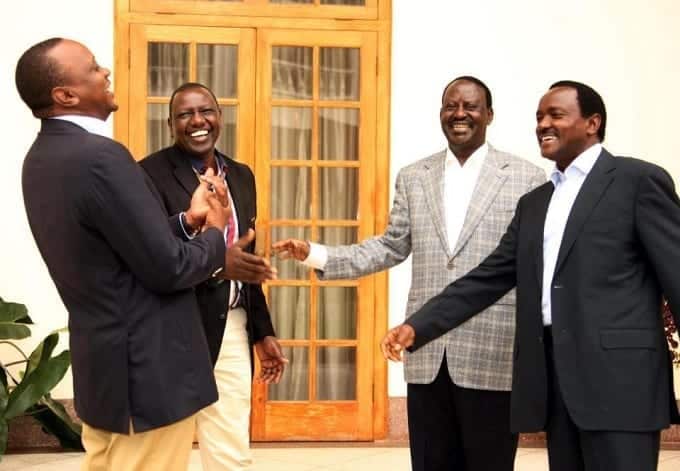
Then, after an election or political negotiation, the same politicians can sit together, shake hands and announce a new political partnership.
The citizens who were fighting yesterday are then expected to support the new alliance today.
The question is:
If politicians can cross ethnic and political lines when it benefits them, why are citizens still fighting each other on their behalf?
Perhaps we should start asking a different question.
Not:
“Which community is our leader from?”
But:
“What has our leader done?”
Not:
“Who is against our tribe?”
But:
“Who is against our interests?”
Not:
“Which community deserves power?”
But:
“What kind of leadership does Kenya deserve?”
Our problems have no tribe
The cost of living does not ask for your tribe before rising.
Unemployment does not check your surname.
Corruption does not discriminate when public resources disappear.
Poor healthcare does not ask whether you are Kikuyu, Luo, Luhya, Kalenjin, Kamba, Kisii, Somali, Mijikenda, Maasai, Meru, Embu or from any of Kenya's other communities.
Floods do not recognise political parties.
Drought does not recognise ethnic boundaries.
Climate change does not have a tribe.
And neither does the national debt.
Our problems are increasingly national, but our political conversations are sometimes becoming increasingly tribal.
That contradiction should concern every Kenyan.
We have more in common than politicians sometimes allow us to see
A boda boda rider in Kisumu and one in Nakuru may belong to different communities, but they understand the struggle of fuel prices.
A young graduate in Nairobi and another in Eldoret may speak different languages at home, but both understand the frustration of searching endlessly for employment.
A mother in Mombasa and another in Nyeri may come from completely different backgrounds, but both worry about the future of their children.
These are the things that should unite us.
Instead, political rhetoric can sometimes convince us that our greatest enemy is the Kenyan living next door.
It isn't.
Our political differences should not become hatred for one another.
We can disagree without becoming enemies.
We can support different candidates without becoming tribal enemies.
We can demand accountability from leaders without defending failure simply because the person comes from our community.
The real test
The real test of Kenya's democracy will not simply be whether we hold elections.
It will be whether we can vote without allowing politicians to weaponise our identities against one another.
It will be whether a Kenyan can look at a candidate and ask:
What is your plan?
What is your record?
How will you create jobs?
How will you improve healthcare?
How will you manage public resources?
How will you protect the environment and our water resources?
How will you make government work for ordinary citizens?
And most importantly:
What happens when you fail? Who will hold you accountable?
Those questions are far more important than the tribe on a candidate's birth certificate.
So, are we falling for divide and rule?
Perhaps the answer is uncomfortable.
Sometimes, yes.
But it does not have to remain that way.
Kenya's 47 counties do not have to become 47 political battlefields.
Our ethnic diversity does not have to become our political weakness.
The responsibility belongs to both leaders and citizens.
Leaders must stop treating ethnicity as a political weapon.
And citizens must stop allowing politicians to turn neighbors into enemies.
Because at the end of every political season, politicians move on.
They negotiate.
They form new alliances.
They attend the same meetings.
They share political platforms.
But ordinary Kenyans are left to live with the consequences of the divisions created in their name.
Maybe it is time we stopped asking which tribe should rule Kenya.
Maybe we should start asking whether Kenya is being well governed.
Because Kenya does not belong to one tribe.
Kenya belongs to all of us.
And if we allow politicians to divide us so completely that we forget that fact, then perhaps the greatest victory will not belong to any tribe.
It will belong to the politics of division itself.
But what happens when our political leaders turn that same diversity into a weapon?
What happens when political conversations increasingly become about“our tribe” versus “their tribe”?
And perhaps the most uncomfortable question of all:
Are we, as Kenyans, falling for it?
For decades, Kenyan politics has had a complicated relationship with ethnicity. Political alliances change, parties are formed and dissolved, leaders cross political lines, but one thing has remained remarkably powerful, the ability to mobilize people through ethnic identity.
Today, we are once again witnessing political narratives that can make Kenyans look at one another not as fellow citizens, but as representatives of different tribes.
One leader points a finger at another community.
Another responds by blaming a different community.
Supporters take sides.
Social media becomes a battlefield.
And ordinary Kenyans begin fighting each other over politicians who may eventually sit together, negotiate and share the same political table.
But who pays the price?
It is rarely the politician.
It is the ordinary Kenyan.
The young person searching for a job does not get employed because their tribe won an argument on social media.
The parent struggling to pay school fees does not receive relief because their community defeated another community politically.
The farmer facing rising costs does not harvest more because politicians have successfully convinced citizens that another tribe is responsible for their problems.
And the unemployed graduate does not suddenly find opportunities because they defended a politician from their own community.
Yet somehow, we keep being persuaded to fight one another.
The genius of divide and rule
Divide-and-rule politics works because it gives people something emotionally powerful to defend.
Instead of asking:
“Has this leader delivered?”
We begin asking:
“Is this leader one of us?”
That is a dangerous change in thinking.
Once politics becomes a contest between communities rather than a contest between ideas, competence and policies can become secondary.
A leader can fail and still receive support simply because people believe that removing them would weaken “their people.”
Another leader can perform well but be rejected because they are perceived to belong to “the other side.”
This is how citizens can become defenders of political interests that do not necessarily improve their own lives.
But are politicians solely to blame?
Not entirely.
We also have to look at ourselves.
Politicians can exploit ethnic divisions, but they cannot exploit them if citizens refuse to participate.
Every time we share inflammatory tribal content without checking it, we contribute.
Every time we insult another community because of a politician, we contribute.
Every time we excuse poor leadership because “at least one of our own is in power,” we contribute.
Every time we judge a person's political worth by their surname or community instead of their ideas and record, we contribute.
The politician may light the match.
But society decides whether the fire spreads.
The politicians can change sides. Can we?
This may be the biggest irony in Kenyan politics.
A politician can spend months telling us that another political camp is dangerous.
Then, after an election or political negotiation, the same politicians can sit together, shake hands and announce a new political partnership.
The citizens who were fighting yesterday are then expected to support the new alliance today.
The question is:
If politicians can cross ethnic and political lines when it benefits them, why are citizens still fighting each other on their behalf?
Perhaps we should start asking a different question.
Not:
“Which community is our leader from?”
But:
“What has our leader done?”
Not:
“Who is against our tribe?”
But:
“Who is against our interests?”
Not:
“Which community deserves power?”
But:
“What kind of leadership does Kenya deserve?”
Our problems have no tribe
The cost of living does not ask for your tribe before rising.
Unemployment does not check your surname.
Corruption does not discriminate when public resources disappear.
Poor healthcare does not ask whether you are Kikuyu, Luo, Luhya, Kalenjin, Kamba, Kisii, Somali, Mijikenda, Maasai, Meru, Embu or from any of Kenya's other communities.
Floods do not recognise political parties.
Drought does not recognise ethnic boundaries.
Climate change does not have a tribe.
And neither does the national debt.
Our problems are increasingly national, but our political conversations are sometimes becoming increasingly tribal.
That contradiction should concern every Kenyan.
We have more in common than politicians sometimes allow us to see
A boda boda rider in Kisumu and one in Nakuru may belong to different communities, but they understand the struggle of fuel prices.
A young graduate in Nairobi and another in Eldoret may speak different languages at home, but both understand the frustration of searching endlessly for employment.
A mother in Mombasa and another in Nyeri may come from completely different backgrounds, but both worry about the future of their children.
These are the things that should unite us.
Instead, political rhetoric can sometimes convince us that our greatest enemy is the Kenyan living next door.
It isn't.
Our political differences should not become hatred for one another.
We can disagree without becoming enemies.
We can support different candidates without becoming tribal enemies.
We can demand accountability from leaders without defending failure simply because the person comes from our community.
The real test
The real test of Kenya's democracy will not simply be whether we hold elections.
It will be whether we can vote without allowing politicians to weaponise our identities against one another.
It will be whether a Kenyan can look at a candidate and ask:
What is your plan?
What is your record?
How will you create jobs?
How will you improve healthcare?
How will you manage public resources?
How will you protect the environment and our water resources?
How will you make government work for ordinary citizens?
And most importantly:
What happens when you fail? Who will hold you accountable?
Those questions are far more important than the tribe on a candidate's birth certificate.
So, are we falling for divide and rule?
Perhaps the answer is uncomfortable.
Sometimes, yes.
But it does not have to remain that way.
Kenya's 47 counties do not have to become 47 political battlefields.
Our ethnic diversity does not have to become our political weakness.
The responsibility belongs to both leaders and citizens.
Leaders must stop treating ethnicity as a political weapon.
And citizens must stop allowing politicians to turn neighbors into enemies.
Because at the end of every political season, politicians move on.
They negotiate.
They form new alliances.
They attend the same meetings.
They share political platforms.
But ordinary Kenyans are left to live with the consequences of the divisions created in their name.
Maybe it is time we stopped asking which tribe should rule Kenya.
Maybe we should start asking whether Kenya is being well governed.
Because Kenya does not belong to one tribe.
Kenya belongs to all of us.
And if we allow politicians to divide us so completely that we forget that fact, then perhaps the greatest victory will not belong to any tribe.
It will belong to the politics of division itself.