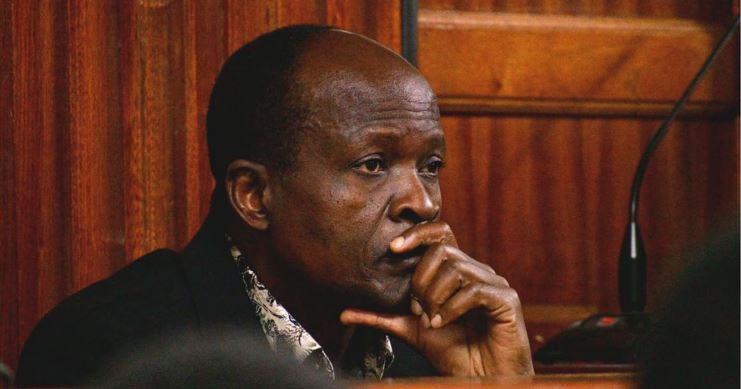
Today, the High Court in Nairobi closes a chapter that has haunted Kenya's public conscience for nearly a decade. Former Migori Governor Zachary Okoth Obado stands before Justice Cecilia Githua for sentencing, nearly eight years after 26-year-old Rongo University student Sharon Otieno was abducted and killed.
Sharon, then 28 weeks pregnant, vanished on September 3, 2018. Her body was found the following day in Homa Bay County, bearing multiple stab wounds and marks of strangulation. Her unborn child did not survive the attack.
On July 23, 2026, after a trial involving 42 witnesses and 81 exhibits, Justice Githua convicted Obado alongside his former personal assistant, Michael Oyamo, and ex-Migori County clerk, Caspal Obiero. The court found that the three had acted in concert: Obado supplying the motive and financing the plot to avoid public scandal, Oyamo executing the abduction and killing, and Obiero handling the cover-up. The judge described the web of circumstantial evidence linking the men to the crime as complete and irresistible.
Now, as the final act plays out, the courtroom holds two competing pleas. Obado, 64 and held at Kamiti Maximum Prison since his conviction, has asked for mercy — pointing to his age, declining health, and the eight-year toll of the trial itself, while continuing to maintain his innocence. Sharon's family, for their part, has told the court they do not oppose leniency. Still, they are asking that justice carry a tangible weight: compensation of roughly Sh4.7 million, along with the house, car, and childcare support they say Obado once promised Sharon before her death. They've told the court the case cost them their savings, their land, and their peace of mind.
Whatever sentence Justice Githua hands down today will do more than close a single case. It will test whether Kenya's courts can hold the powerful to the same account as everyone else — and it will tell Sharon Otieno's family, and the country watching, what justice looks like when it finally arrives.
Sharon, then 28 weeks pregnant, vanished on September 3, 2018. Her body was found the following day in Homa Bay County, bearing multiple stab wounds and marks of strangulation. Her unborn child did not survive the attack.
On July 23, 2026, after a trial involving 42 witnesses and 81 exhibits, Justice Githua convicted Obado alongside his former personal assistant, Michael Oyamo, and ex-Migori County clerk, Caspal Obiero. The court found that the three had acted in concert: Obado supplying the motive and financing the plot to avoid public scandal, Oyamo executing the abduction and killing, and Obiero handling the cover-up. The judge described the web of circumstantial evidence linking the men to the crime as complete and irresistible.
Now, as the final act plays out, the courtroom holds two competing pleas. Obado, 64 and held at Kamiti Maximum Prison since his conviction, has asked for mercy — pointing to his age, declining health, and the eight-year toll of the trial itself, while continuing to maintain his innocence. Sharon's family, for their part, has told the court they do not oppose leniency. Still, they are asking that justice carry a tangible weight: compensation of roughly Sh4.7 million, along with the house, car, and childcare support they say Obado once promised Sharon before her death. They've told the court the case cost them their savings, their land, and their peace of mind.
Whatever sentence Justice Githua hands down today will do more than close a single case. It will test whether Kenya's courts can hold the powerful to the same account as everyone else — and it will tell Sharon Otieno's family, and the country watching, what justice looks like when it finally arrives.