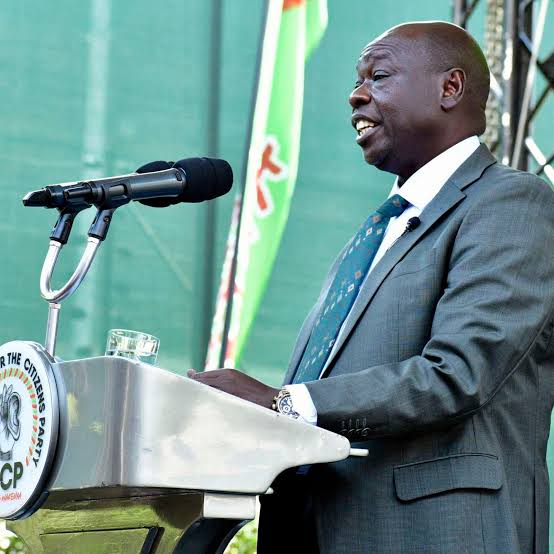
Former Deputy President Rigathi Gachagua has once again placed himself at the centre of Kenya’s political conversation.
In his latest press briefing, Gachagua delivered a scathing assessment of President William Ruto’s administration and raised a series of serious allegations concerning governance, security, alleged abductions, extrajudicial killings and the circumstances surrounding the deaths of prominent Kenyans.
These are not ordinary political accusations.
But neither should they automatically be accepted as facts.
And that is what makes Gachagua’s latest intervention so interesting.
Is Gachagua simply singing the opposition song ahead of 2027, or is the former Deputy President speaking from information he acquired while he was inside government?
Perhaps Kenyans should listen carefully but reserve judgment.
The former insider
There is one thing that makes Gachagua different from an ordinary opposition politician.
He was once inside the room.
As Deputy President, Gachagua was part of the Kenya Kwanza administration he is now criticizing. He interacted with senior government officials and institutions and had a front-row seat to the workings of government.
That does not mean that everything he says today is true.
Political relationships change. Former allies become opponents. People who once defended a government can later become its fiercest critics.
But his history inside government creates a legitimate question:
What does Gachagua know now that he did not say while he was in government?
And perhaps even more importantly:
Why is he saying it now?
Serious allegations cannot be treated as ordinary politics
Gachagua's address went beyond the usual accusations of poor governance or economic mismanagement.
He raised allegations concerning alleged abductions, killings and the conduct of security agencies.
He also questioned aspects surrounding the deaths of former Prime Minister Raila Odinga, former Chief of Defence Forces General Francis Ogolla and former Emurua Dikirr MP Johana Ng'eno.
These claims are serious enough to demand more than political debate.
But there is a fundamental principle that must remain intact:
An allegation is not a fact simply because it is made publicly.
Gachagua has made claims.
The government and security agencies have rejected some of them.
The truth therefore remains a matter for evidence and, where necessary, independent investigation.
That distinction is important because Kenya has seen political accusations become accepted as fact simply through repetition.
That should not happen here.
The DCI has answered but the questions remain
The Directorate of Criminal Investigations pushed back against Gachagua's accusations, describing them as unsubstantiated and challenging him to provide credible evidence.
That is a reasonable response from a law-enforcement institution.
If somebody makes an allegation of criminal conduct, evidence should be produced.
But the reverse is equally important.
If credible evidence exists, the institutions responsible for investigating crime should be prepared to examine it without fear or favour.
This should not become a contest between Gachagua's word and the DCI's word.
There should be a third participant in the conversation:
evidence.
Then there is the question of Raila Odinga
Gachagua's comments surrounding the death of Raila Odinga are particularly sensitive.
Raila was one of Kenya's most influential political figures, and his death naturally generated enormous public interest.
Gachagua has raised questions about the circumstances surrounding his final days and called for greater scrutiny.
Those questions can be asked.
But asking a question is not the same as establishing wrongdoing.
There is a significant difference between saying:
“Kenyans deserve answers.”
and saying:
“Someone deliberately caused his death.”
The first is a demand for transparency.
The second requires evidence.
That distinction should not be lost in the political noise.
If there are unanswered questions surrounding Raila's death, the appropriate response is credible investigation—not speculation from either side.
General Ogolla and the helicopter crash
Gachagua also questioned aspects surrounding the helicopter crash that killed General Francis Ogolla and other military personnel.
Again, these are issues that require facts.
Aircraft accidents can be investigated through technical evidence.
Maintenance records.
Flight records.
Weather conditions.
Fuel records.
Engineering reports.
Witness accounts.
Accident investigation findings.
These are capable of establishing what happened far more reliably than political speeches.
If Gachagua's questions are supported by evidence, investigations should establish that.
If they are not, investigations should establish that too.
The public should not have to decide based on which politician gives the more convincing press conference.
And then came the allegations surrounding Johana Ng'eno
Gachagua also raised questions concerning the helicopter crash that killed former Emurua Dikirr MP Johana Ng'eno.
He made claims regarding the aircraft's fuel and circumstances preceding the crash.
Government officials have rejected those claims.
Once again, there are two competing narratives.
And once again, neither side should be allowed to become the judge of its own case.
If there was contaminated fuel, there should be technical evidence.
If there was no contaminated fuel, there should also be evidence.
If there were irregularities surrounding the aircraft, records should reveal them.
If there were none, that should equally be established.
This is precisely where independent investigation matters.
But let us not pretend politics is absent
There is another reality that cannot be ignored.
Gachagua is now an opposition politician.
He leads the Democracy for Citizens Party and is positioning himself in Kenya's increasingly competitive 2027 political landscape.
His political objective is therefore clear: challenge the Ruto administration and build an alternative political base.
That does not make his allegations false.
But it does mean Kenyans should approach them critically.
Every politician has incentives.
Government politicians have incentives to defend their administration.
Opposition politicians have incentives to expose its weaknesses.
The public should therefore avoid becoming a captive audience to either side.
Listen.
Question.
Verify.
Then decide.
Could the songbird actually know the tune?
This is where things become complicated.
Gachagua spent years inside the government.
It is entirely reasonable to ask whether he possesses information that ordinary Kenyans do not.
But there is a danger in going too far with that assumption.
Being a former insider does not automatically make someone a reliable witness.
People can misremember.
People can reinterpret events after political relationships collapse.
And politicians can selectively reveal information when it serves their interests.
So Gachagua's history inside government gives his claims context.
It does not give them automatic credibility.
The evidence still has to speak.
And the government has its own burden
The government cannot simply dismiss every allegation by describing Gachagua as a political opponent.
That would be equally problematic.
When allegations concern deaths, disappearances, security agencies or potential abuse of state power, the public has a legitimate interest in knowing what happened.
A government confident in its institutions should welcome credible investigations.
If Gachagua is wrong, the evidence should demonstrate that.
If his allegations have some basis, the same evidence should reveal it.
That is the purpose of institutions.
Kenya should not turn serious allegations into political entertainment
Perhaps the greatest danger is that Kenyans become so politically polarised that every allegation is judged according to political allegiance.
If you support Gachagua, you believe him.
If you support Ruto, you reject him.
If you support ODM, you interpret the story differently.
That is not how justice should work.
An alleged abduction should not be a “Gachagua issue.”
A suspicious death should not be a “Ruto issue.”
An aviation accident should not be a political party issue.
These are matters of public interest.
And the truth should not belong to whichever politician controls the loudest microphone.
So, Gachagua the Song Bird?
Maybe Gachagua is simply singing.
Maybe he has discovered that accusations are politically useful as Kenya moves toward 2027.
Maybe he is using his experience inside government to expose information that he believes the public deserves to know.
Or perhaps there is a little bit of both.
A politician can have political ambitions and still tell the truth.
A former insider can possess genuine information and still exaggerate it.
That is why the public should resist the temptation to reach a conclusion before the evidence arrives.
Gachagua has made serious allegations.
The government and security agencies have challenged or rejected them.
The next step should not be another press conference.
It should be verification.
Where is the evidence?
Can the claims be independently corroborated?
Why were some of these allegations not raised earlier?
What records exist?
What do the relevant investigations say?
And perhaps the most important question:
What does Gachagua know that he has not yet told Kenyans?
Maybe he is simply a songbird singing the opposition tune.
Maybe he knows the tune because he was once sitting inside the room where the music was being played.
For now, we do not have to choose.
Let Gachagua produce what he knows. Let the government produce what it knows. Let independent institutions investigate what can be investigated.
And then let Kenyans judge.
Because ultimately, this should not be about who sings the loudest.
It should be about who is telling the truth.
In his latest press briefing, Gachagua delivered a scathing assessment of President William Ruto’s administration and raised a series of serious allegations concerning governance, security, alleged abductions, extrajudicial killings and the circumstances surrounding the deaths of prominent Kenyans.
These are not ordinary political accusations.
But neither should they automatically be accepted as facts.
And that is what makes Gachagua’s latest intervention so interesting.
Is Gachagua simply singing the opposition song ahead of 2027, or is the former Deputy President speaking from information he acquired while he was inside government?
Perhaps Kenyans should listen carefully but reserve judgment.
The former insider
There is one thing that makes Gachagua different from an ordinary opposition politician.
He was once inside the room.
As Deputy President, Gachagua was part of the Kenya Kwanza administration he is now criticizing. He interacted with senior government officials and institutions and had a front-row seat to the workings of government.
That does not mean that everything he says today is true.
Political relationships change. Former allies become opponents. People who once defended a government can later become its fiercest critics.
But his history inside government creates a legitimate question:
What does Gachagua know now that he did not say while he was in government?
And perhaps even more importantly:
Why is he saying it now?
Serious allegations cannot be treated as ordinary politics
Gachagua's address went beyond the usual accusations of poor governance or economic mismanagement.
He raised allegations concerning alleged abductions, killings and the conduct of security agencies.
He also questioned aspects surrounding the deaths of former Prime Minister Raila Odinga, former Chief of Defence Forces General Francis Ogolla and former Emurua Dikirr MP Johana Ng'eno.
These claims are serious enough to demand more than political debate.
But there is a fundamental principle that must remain intact:
An allegation is not a fact simply because it is made publicly.
Gachagua has made claims.
The government and security agencies have rejected some of them.
The truth therefore remains a matter for evidence and, where necessary, independent investigation.
That distinction is important because Kenya has seen political accusations become accepted as fact simply through repetition.
That should not happen here.
The DCI has answered but the questions remain
The Directorate of Criminal Investigations pushed back against Gachagua's accusations, describing them as unsubstantiated and challenging him to provide credible evidence.
That is a reasonable response from a law-enforcement institution.
If somebody makes an allegation of criminal conduct, evidence should be produced.
But the reverse is equally important.
If credible evidence exists, the institutions responsible for investigating crime should be prepared to examine it without fear or favour.
This should not become a contest between Gachagua's word and the DCI's word.
There should be a third participant in the conversation:
evidence.
Then there is the question of Raila Odinga
Gachagua's comments surrounding the death of Raila Odinga are particularly sensitive.
Raila was one of Kenya's most influential political figures, and his death naturally generated enormous public interest.
Gachagua has raised questions about the circumstances surrounding his final days and called for greater scrutiny.
Those questions can be asked.
But asking a question is not the same as establishing wrongdoing.
There is a significant difference between saying:
“Kenyans deserve answers.”
and saying:
“Someone deliberately caused his death.”
The first is a demand for transparency.
The second requires evidence.
That distinction should not be lost in the political noise.
If there are unanswered questions surrounding Raila's death, the appropriate response is credible investigation—not speculation from either side.
General Ogolla and the helicopter crash
Gachagua also questioned aspects surrounding the helicopter crash that killed General Francis Ogolla and other military personnel.
Again, these are issues that require facts.
Aircraft accidents can be investigated through technical evidence.
Maintenance records.
Flight records.
Weather conditions.
Fuel records.
Engineering reports.
Witness accounts.
Accident investigation findings.
These are capable of establishing what happened far more reliably than political speeches.
If Gachagua's questions are supported by evidence, investigations should establish that.
If they are not, investigations should establish that too.
The public should not have to decide based on which politician gives the more convincing press conference.
And then came the allegations surrounding Johana Ng'eno
Gachagua also raised questions concerning the helicopter crash that killed former Emurua Dikirr MP Johana Ng'eno.
He made claims regarding the aircraft's fuel and circumstances preceding the crash.
Government officials have rejected those claims.
Once again, there are two competing narratives.
And once again, neither side should be allowed to become the judge of its own case.
If there was contaminated fuel, there should be technical evidence.
If there was no contaminated fuel, there should also be evidence.
If there were irregularities surrounding the aircraft, records should reveal them.
If there were none, that should equally be established.
This is precisely where independent investigation matters.
But let us not pretend politics is absent
There is another reality that cannot be ignored.
Gachagua is now an opposition politician.
He leads the Democracy for Citizens Party and is positioning himself in Kenya's increasingly competitive 2027 political landscape.
His political objective is therefore clear: challenge the Ruto administration and build an alternative political base.
That does not make his allegations false.
But it does mean Kenyans should approach them critically.
Every politician has incentives.
Government politicians have incentives to defend their administration.
Opposition politicians have incentives to expose its weaknesses.
The public should therefore avoid becoming a captive audience to either side.
Listen.
Question.
Verify.
Then decide.
Could the songbird actually know the tune?
This is where things become complicated.
Gachagua spent years inside the government.
It is entirely reasonable to ask whether he possesses information that ordinary Kenyans do not.
But there is a danger in going too far with that assumption.
Being a former insider does not automatically make someone a reliable witness.
People can misremember.
People can reinterpret events after political relationships collapse.
And politicians can selectively reveal information when it serves their interests.
So Gachagua's history inside government gives his claims context.
It does not give them automatic credibility.
The evidence still has to speak.
And the government has its own burden
The government cannot simply dismiss every allegation by describing Gachagua as a political opponent.
That would be equally problematic.
When allegations concern deaths, disappearances, security agencies or potential abuse of state power, the public has a legitimate interest in knowing what happened.
A government confident in its institutions should welcome credible investigations.
If Gachagua is wrong, the evidence should demonstrate that.
If his allegations have some basis, the same evidence should reveal it.
That is the purpose of institutions.
Kenya should not turn serious allegations into political entertainment
Perhaps the greatest danger is that Kenyans become so politically polarised that every allegation is judged according to political allegiance.
If you support Gachagua, you believe him.
If you support Ruto, you reject him.
If you support ODM, you interpret the story differently.
That is not how justice should work.
An alleged abduction should not be a “Gachagua issue.”
A suspicious death should not be a “Ruto issue.”
An aviation accident should not be a political party issue.
These are matters of public interest.
And the truth should not belong to whichever politician controls the loudest microphone.
So, Gachagua the Song Bird?
Maybe Gachagua is simply singing.
Maybe he has discovered that accusations are politically useful as Kenya moves toward 2027.
Maybe he is using his experience inside government to expose information that he believes the public deserves to know.
Or perhaps there is a little bit of both.
A politician can have political ambitions and still tell the truth.
A former insider can possess genuine information and still exaggerate it.
That is why the public should resist the temptation to reach a conclusion before the evidence arrives.
Gachagua has made serious allegations.
The government and security agencies have challenged or rejected them.
The next step should not be another press conference.
It should be verification.
Where is the evidence?
Can the claims be independently corroborated?
Why were some of these allegations not raised earlier?
What records exist?
What do the relevant investigations say?
And perhaps the most important question:
What does Gachagua know that he has not yet told Kenyans?
Maybe he is simply a songbird singing the opposition tune.
Maybe he knows the tune because he was once sitting inside the room where the music was being played.
For now, we do not have to choose.
Let Gachagua produce what he knows. Let the government produce what it knows. Let independent institutions investigate what can be investigated.
And then let Kenyans judge.
Because ultimately, this should not be about who sings the loudest.
It should be about who is telling the truth.