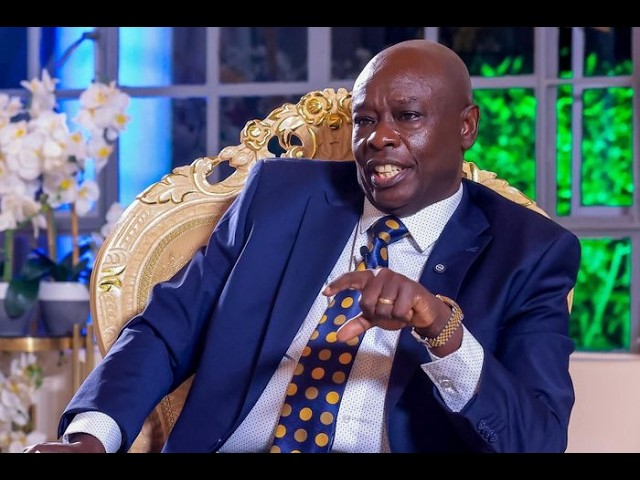
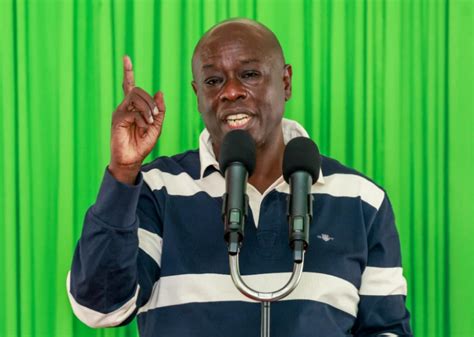
Rigathi Gachagua’s latest interview has once again placed Kenya’s political future at the centre of national debate. With the 2027 General Election approaching, the former Deputy President is pushing for opposition unity, drawing comparisons with the 2002 political alliance that ended KANU’s decades-long rule.
On paper, the strategy makes sense. A united opposition could present a serious challenge to President William Ruto’s re-election bid. However, beneath the political calculations lies a question every Kenyan should be asking: Are our leaders uniting to transform the country, or are they simply uniting to capture power?
Unity Is Not Enough
Kenya’s political history is full of alliances formed in the name of change. Yet some of these coalitions have struggled to deliver the transformation voters expected once their leaders entered government.
The 2002 comparison is politically appealing, but history does not repeat itself simply because politicians want it to. The circumstances are different, the electorate has changed, and Kenyans are increasingly concerned about the cost of living, unemployment, taxation, corruption and the quality of public services.
Gachagua and other opposition leaders must therefore offer more than promises of unity. They need to explain what they would do differently if given the opportunity to govern.
A coalition without a clear policy agenda is merely an electoral arrangement. Kenyans deserve something more substantial.
Who Will Benefit From This Alliance?
Gachagua’s apparent willingness to support another opposition candidate raises important questions about the future leadership of the movement. His remarks may signal political flexibility, but they also highlight the difficult negotiations that lie ahead.
Who will become the presidential candidate? How will that person be selected? What happens if powerful leaders disagree over the outcome?
These are not minor questions. Political alliances can collapse when personal ambitions collide, leaving voters caught between competing interests.
If opposition leaders genuinely believe that Kenya needs a change of direction, they must demonstrate that commitment by establishing transparent ways of selecting their candidate and resolving internal disagreements.
Otherwise, the unity being discussed today could become the division witnessed tomorrow.
Kenyans Need More Than Anti-Ruto Politics
One of the biggest weaknesses in Kenyan political debate is the tendency to define political movements by the leaders they oppose rather than the solutions they offer.
Opposing Ruto is not, by itself, a development strategy. Neither is defending the current administration proof that its policies are working.
Kenyans need leaders who can explain how they intend to create jobs, support small businesses, improve healthcare, strengthen public education and make essential services affordable.
Young people looking for employment do not benefit simply because politicians have agreed to work together. Families struggling with rising expenses need practical economic solutions, not endless political negotiations.
And communities facing unreliable water supplies, poor sanitation and environmental degradation need leaders who understand that development must reach beyond campaign rallies and political speeches.
The real test of any political alliance is not how many influential leaders it brings together, but how convincingly it addresses the problems ordinary citizens face.
The 2027 Election Must Be About Accountability
Gachagua’s interview presents an opportunity for the opposition to explain its vision for Kenya. It should also remind the current administration that political power is never guaranteed and that citizens have the right to demand accountability.
However, accountability must apply to everyone. Opposition leaders should be questioned about their records, their policies and their intentions just as firmly as those in government.
Kenyans should resist the temptation to treat political figures as heroes simply because they challenge leaders they dislike. Every candidate seeking public office must be judged on competence, integrity, consistency and a credible plan for the country.
Democracy becomes stronger when voters scrutinise all political camps rather than blindly supporting one side.
My Take
Gachagua may be right that opposition unity could change the political equation in 2027. But unity without a clear agenda, credible leadership and accountability risks producing another coalition that excites voters before an election and disappoints them afterwards.
Kenya does not merely need a new combination of political leaders. It needs a different standard of leadership.
The question is no longer simply whether the opposition can defeat William Ruto. It is whether whoever wins can govern better, protect public resources and improve the lives of ordinary Kenyans.
As the 2027 elections approach, voters must remember that political alliances are formed by leaders, but the consequences of their decisions are experienced by citizens.
Ultimately, Kenya does not need politicians who are merely united against someone. It needs leaders who are united around something worth fighting for: a better country for every Kenyan.