
A screenshot circulating online makes a provocative connection: the IMF is allegedly rejecting a new deal with Kenya, and within 24 hours Kenya records its first Ebola case — with the claim that money is needed to fund the 2027 campaign.
The timing is striking. But the two events need to be separated from the political speculation.
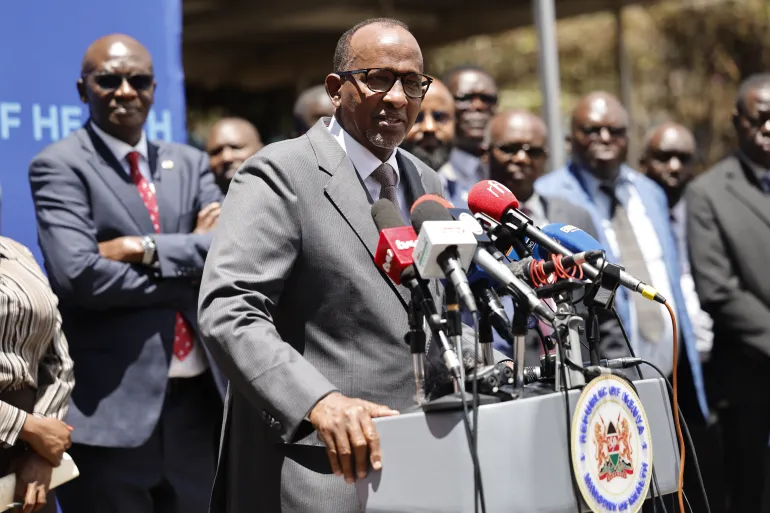
Kenya has indeed confirmed its first imported Ebola case, after a Kenyan citizen who had lived in the Democratic Republic of Congo for seven years travelled through Uganda and arrived in Nairobi on October 3. He later died in Nairobi. Health authorities have begun contact tracing and monitoring people who may have been exposed.
At the same time, Kenya's efforts to secure a new IMF programme are facing serious difficulties. Recent reporting indicates that a new IMF deal is unlikely before the 2027 General Election, with the Fund expected to continue engaging Kenya and conduct Article IV consultations in December.
But this is where the screenshot's interpretation becomes questionable.
The IMF problem is bigger than one rejected deal
Kenya's previous IMF programme was terminated in 2025 after the country failed to meet several agreed conditions. The Fund did not release a further tranche of approximately $850 million, and Kenya has since been looking for another financing arrangement.
The challenge is that an IMF programme does not simply mean "give Kenya money."
It normally comes with conditions around revenue collection, government expenditure, public-sector reforms, debt management and fiscal discipline.
And 2027 makes the situation even more complicated.
An incoming government could potentially change economic priorities after the election. From the IMF's perspective, committing to a long-term programme just months before an election carries a question of policy continuity.
That is why the possibility of waiting until after the election matters.
Then comes Ebola
Kenya's Ebola case is a completely different issue — and there is currently no evidence that it was connected to the IMF negotiations or political financing.
The patient had travelled from the DRC through Uganda before reaching Nairobi. Authorities have identified contacts and are conducting surveillance and isolation measures.
This is therefore not simply a political story.
It is also a public-health preparedness test.
Kenya now has to demonstrate that its surveillance systems, border screening, laboratories, isolation facilities, healthcare workers and emergency-response structures can prevent an imported case from becoming community transmission.
But the political question remains
Where the screenshot raises an interesting question is not whether Ebola was somehow "planned" to replace IMF money.
There is no evidence for that.
The bigger question is:
What happens to Kenya's finances when the country is approaching an expensive election without the certainty of IMF financing?
Campaigns require enormous political mobilisation. Government itself faces increasing demands for development spending, public-sector salaries, debt repayment and social programmes. Meanwhile, Kenya cannot simply assume that external lenders will continuously provide cheap financing.
And the IMF has already made its position clear through the conditions attached to previous programmes.
So the real conversation should be about fiscal sustainability, debt management and political accountability — not conspiracy theories.
2027 will test more than politicians
Kenya is heading toward an election in which economic promises will compete with economic reality.
Politicians will promise jobs.
They will promise lower taxes.
They will promise cheaper living costs.
They will promise development.
But somebody eventually has to answer the question:
Who pays for all of it?
And that is where IMF negotiations, public debt, domestic revenue, government expenditure and political campaigns intersect.
Meanwhile, the Ebola case reminds us of another uncomfortable reality: a country can face several crises at the same time.
Economic pressure does not stop because of a health emergency. A health emergency does not wait for an election. And political campaigns do not suspend themselves because government finances are under pressure.
Kenya therefore needs something more valuable than another short-term financial deal:
strong institutions capable of managing the country even when the political and economic pressure is at its highest.
The screenshot may be designed to provoke suspicion.
But beneath the politics, there is a much more important question:
Can Kenya finance its 2027 ambitions while protecting its economy, public health and long-term stability?
That is the conversation Kenyans should be having.
The timing is striking. But the two events need to be separated from the political speculation.
Kenya has indeed confirmed its first imported Ebola case, after a Kenyan citizen who had lived in the Democratic Republic of Congo for seven years travelled through Uganda and arrived in Nairobi on October 3. He later died in Nairobi. Health authorities have begun contact tracing and monitoring people who may have been exposed.
At the same time, Kenya's efforts to secure a new IMF programme are facing serious difficulties. Recent reporting indicates that a new IMF deal is unlikely before the 2027 General Election, with the Fund expected to continue engaging Kenya and conduct Article IV consultations in December.
But this is where the screenshot's interpretation becomes questionable.
The IMF problem is bigger than one rejected deal
Kenya's previous IMF programme was terminated in 2025 after the country failed to meet several agreed conditions. The Fund did not release a further tranche of approximately $850 million, and Kenya has since been looking for another financing arrangement.
The challenge is that an IMF programme does not simply mean "give Kenya money."
It normally comes with conditions around revenue collection, government expenditure, public-sector reforms, debt management and fiscal discipline.
And 2027 makes the situation even more complicated.
An incoming government could potentially change economic priorities after the election. From the IMF's perspective, committing to a long-term programme just months before an election carries a question of policy continuity.
That is why the possibility of waiting until after the election matters.
Then comes Ebola
Kenya's Ebola case is a completely different issue — and there is currently no evidence that it was connected to the IMF negotiations or political financing.
The patient had travelled from the DRC through Uganda before reaching Nairobi. Authorities have identified contacts and are conducting surveillance and isolation measures.
This is therefore not simply a political story.
It is also a public-health preparedness test.
Kenya now has to demonstrate that its surveillance systems, border screening, laboratories, isolation facilities, healthcare workers and emergency-response structures can prevent an imported case from becoming community transmission.
But the political question remains
Where the screenshot raises an interesting question is not whether Ebola was somehow "planned" to replace IMF money.
There is no evidence for that.
The bigger question is:
What happens to Kenya's finances when the country is approaching an expensive election without the certainty of IMF financing?
Campaigns require enormous political mobilisation. Government itself faces increasing demands for development spending, public-sector salaries, debt repayment and social programmes. Meanwhile, Kenya cannot simply assume that external lenders will continuously provide cheap financing.
And the IMF has already made its position clear through the conditions attached to previous programmes.
So the real conversation should be about fiscal sustainability, debt management and political accountability — not conspiracy theories.
2027 will test more than politicians
Kenya is heading toward an election in which economic promises will compete with economic reality.
Politicians will promise jobs.
They will promise lower taxes.
They will promise cheaper living costs.
They will promise development.
But somebody eventually has to answer the question:
Who pays for all of it?
And that is where IMF negotiations, public debt, domestic revenue, government expenditure and political campaigns intersect.
Meanwhile, the Ebola case reminds us of another uncomfortable reality: a country can face several crises at the same time.
Economic pressure does not stop because of a health emergency. A health emergency does not wait for an election. And political campaigns do not suspend themselves because government finances are under pressure.
Kenya therefore needs something more valuable than another short-term financial deal:
strong institutions capable of managing the country even when the political and economic pressure is at its highest.
The screenshot may be designed to provoke suspicion.
But beneath the politics, there is a much more important question:
Can Kenya finance its 2027 ambitions while protecting its economy, public health and long-term stability?
That is the conversation Kenyans should be having.