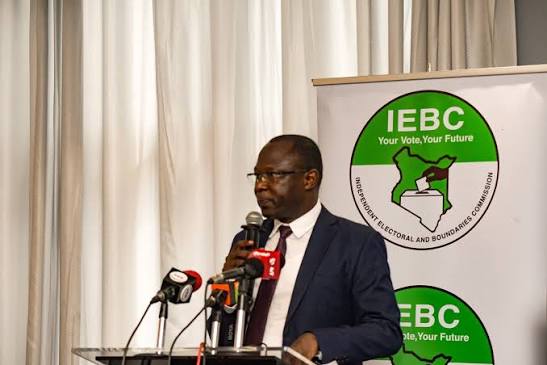
Kenya is now firmly on the road to the August 10, 2027 General Election, and with the countdown underway, one question is becoming increasingly important: Is the Independent Electoral and Boundaries Commission (IEBC) ready to deliver an election that Kenyans can trust?
The answer is not a simple yes or no.
There are clear signs that the Commission has begun serious preparations. But there are also unresolved concerns around funding, technology, voter registration, electoral reforms, security and, perhaps most importantly, public confidence.
The 2027 election will therefore test not only IEBC's logistical capacity, but its ability to convince Kenyans that every vote will be protected.
The Preparations Are Underway
IEBC has already established a detailed roadmap for the 2027 election through its Election Operations Plan. The plan covers voter registration, technology, staff preparation, logistics, data protection and voter verification.
The Commission's plan shows that technology procurement and deployment are already part of the election preparation cycle, while KIEMS kits will be configured for voter registration and later voter verification. Political parties are also scheduled to receive training on election technology ahead of the polls.
IEBC has also reported significant progress in voter registration.
As of August 2026, the Commission said 2,936,516 Kenyans had registered as voters since Continuous Voter Registration began in September 2025, with an eventual target of approximately 28.5 million registered voters for the 2027 election.
These developments suggest that IEBC is not starting from scratch.
But preparation on paper is only one part of the equation.
The Money Question
One of the biggest concerns is funding.
IEBC has repeatedly warned that inadequate financing could affect its ability to prepare adequately for the election. The Commission had sought approximately KSh74.8 billion, while Parliament allocated about KSh41.3 billion, leaving a reported gap of approximately KSh33.5 billion.
That gap matters.
Elections require money for voter registration, voter education, technology, recruitment and training of election officials, transportation, security coordination, polling materials and results management.
A commission can have an excellent election plan, but if it lacks the resources to implement that plan, the quality of the election can ultimately suffer.
The funding question therefore deserves more public attention than it currently receives.
Technology Will Be Under the Microscope
Kenya's elections have increasingly relied on technology to identify voters and transmit results.
For 2027, IEBC is again planning to use biometric systems and electronic election-management technology.
The Commission's own operational plan includes activities ranging from upgrading its technology infrastructure and strengthening disaster recovery systems to deploying electoral technology and preparing KIEMS kits for voter verification.
This is potentially positive.
Technology can reduce human error, improve identification and make election processes faster.
But technology can also become a source of suspicion when systems fail or when political parties and voters do not understand what is happening behind the scenes.
The lesson for IEBC is straightforward:
Do not wait until election day to prove that the technology works.
The systems should be repeatedly tested, audited and demonstrated to political parties, observers, journalists and the public before the election.
Transparency will be just as important as functionality.
Public Trust May Be IEBC's Biggest Challenge
An election can be technically well organized and still face a crisis if citizens do not trust the institution conducting it.
This is one of the most difficult challenges facing IEBC.
The Commission's leadership has been seeking cooperation with the Judiciary, prosecution agencies and other justice-sector institutions, arguing that coordinated action will be essential to protecting electoral integrity and delivering a free, fair and peaceful election.
That coordination is important because IEBC does not operate in isolation.
Political parties, security agencies, courts, candidates, observers, media organisations and voters all influence whether an election is ultimately perceived as credible.
If one part of the system fails, confidence in the entire process can suffer.
The Security Question Cannot Be Ignored
IEBC Chairperson Erastus Ethekon has also emphasised the need for a peaceful political environment, warning that violence, incitement, division and disorder could undermine the conduct of a credible election.
This raises an important question: Who protects the election environment?
IEBC manages elections, but it does not control the country's entire security apparatus.
Political leaders therefore have a responsibility to avoid inflammatory rhetoric, while security agencies must demonstrate professionalism and impartiality.
A free election requires more than free voting.
People must also be able to campaign, attend political meetings and cast their ballots without intimidation or violence.
Electoral Reforms Are Running Against the Clock
IEBC has called on Parliament to enact proposed electoral reforms early enough for the Commission to incorporate them into its preparations.
This is critical.
Changing electoral rules close to an election can create confusion among candidates, parties, election officials and voters.
If reforms are necessary, they should be debated openly, passed in good time and clearly communicated.
The same applies to campaign financing.
Kenya's elections are increasingly expensive political contests. Without effective controls and enforcement, money can influence nominations, campaigns and even voter behavior.
A free and fair election must therefore address not only who votes, but also the environment in which candidates compete for those votes.
Is IEBC Ready?
At this point, the fairest answer is:
IEBC is preparing, but it is too early to say that it is fully ready.
The Commission has a roadmap. It has begun voter registration. It is planning its technology systems and working with other institutions.
There is also international support. In July 2026, IEBC and the United Nations Development Programme signed a KSh1.7 billion electoral support programme aimed at strengthening preparations for the 2027 election.
But major questions remain around funding, technology, reforms, security and public confidence.
And those questions must be answered before August 10, 2027, not during the counting of votes.
Kenyans Should Not Be Passive Spectators
The responsibility for a credible election does not belong to IEBC alone.
Political parties must respect electoral rules.
Candidates must reject violence and voter intimidation.
Security agencies must remain impartial.
The Judiciary must be prepared to resolve disputes independently and efficiently.
The media must scrutinize the process responsibly.
And voters themselves must demand transparency.
Kenyans should be asking questions now, while there is still time to correct weaknesses.
Where is the money going?
Are the electoral systems being independently tested?
Is the voters' register accurate?
Are political parties being treated equally?
Are electoral reforms being implemented on time?
Are election officials being adequately trained?
And perhaps most importantly:
Will Kenyans have enough confidence in the process to accept the results, whether their preferred candidate wins or loses?
The Real Test Comes Before Election Day
IEBC does not have to wait until August 2027 to prove its credibility.
It can begin proving it now.
Every transparent procurement process, every accurate voter registration exercise, every properly conducted by-election, every openly addressed complaint and every independently verifiable technology test contributes to public confidence.
The 2027 election will ultimately be judged not only by the person who occupies State House afterwards, but by whether Kenyans believe the process that put them there was legitimate.
IEBC has started the journey.
The question now is whether, by August 10, 2027, it will have done enough to convince the country that every Kenyan who casts a vote will have an equal chance of having that vote counted and protected.
That is the standard Kenya should demand and the standard IEBC should be prepared to meet.
The answer is not a simple yes or no.
There are clear signs that the Commission has begun serious preparations. But there are also unresolved concerns around funding, technology, voter registration, electoral reforms, security and, perhaps most importantly, public confidence.
The 2027 election will therefore test not only IEBC's logistical capacity, but its ability to convince Kenyans that every vote will be protected.
The Preparations Are Underway
IEBC has already established a detailed roadmap for the 2027 election through its Election Operations Plan. The plan covers voter registration, technology, staff preparation, logistics, data protection and voter verification.
The Commission's plan shows that technology procurement and deployment are already part of the election preparation cycle, while KIEMS kits will be configured for voter registration and later voter verification. Political parties are also scheduled to receive training on election technology ahead of the polls.
IEBC has also reported significant progress in voter registration.
As of August 2026, the Commission said 2,936,516 Kenyans had registered as voters since Continuous Voter Registration began in September 2025, with an eventual target of approximately 28.5 million registered voters for the 2027 election.
These developments suggest that IEBC is not starting from scratch.
But preparation on paper is only one part of the equation.
The Money Question
One of the biggest concerns is funding.
IEBC has repeatedly warned that inadequate financing could affect its ability to prepare adequately for the election. The Commission had sought approximately KSh74.8 billion, while Parliament allocated about KSh41.3 billion, leaving a reported gap of approximately KSh33.5 billion.
That gap matters.
Elections require money for voter registration, voter education, technology, recruitment and training of election officials, transportation, security coordination, polling materials and results management.
A commission can have an excellent election plan, but if it lacks the resources to implement that plan, the quality of the election can ultimately suffer.
The funding question therefore deserves more public attention than it currently receives.
Technology Will Be Under the Microscope
Kenya's elections have increasingly relied on technology to identify voters and transmit results.
For 2027, IEBC is again planning to use biometric systems and electronic election-management technology.
The Commission's own operational plan includes activities ranging from upgrading its technology infrastructure and strengthening disaster recovery systems to deploying electoral technology and preparing KIEMS kits for voter verification.
This is potentially positive.
Technology can reduce human error, improve identification and make election processes faster.
But technology can also become a source of suspicion when systems fail or when political parties and voters do not understand what is happening behind the scenes.
The lesson for IEBC is straightforward:
Do not wait until election day to prove that the technology works.
The systems should be repeatedly tested, audited and demonstrated to political parties, observers, journalists and the public before the election.
Transparency will be just as important as functionality.
Public Trust May Be IEBC's Biggest Challenge
An election can be technically well organized and still face a crisis if citizens do not trust the institution conducting it.
This is one of the most difficult challenges facing IEBC.
The Commission's leadership has been seeking cooperation with the Judiciary, prosecution agencies and other justice-sector institutions, arguing that coordinated action will be essential to protecting electoral integrity and delivering a free, fair and peaceful election.
That coordination is important because IEBC does not operate in isolation.
Political parties, security agencies, courts, candidates, observers, media organisations and voters all influence whether an election is ultimately perceived as credible.
If one part of the system fails, confidence in the entire process can suffer.
The Security Question Cannot Be Ignored
IEBC Chairperson Erastus Ethekon has also emphasised the need for a peaceful political environment, warning that violence, incitement, division and disorder could undermine the conduct of a credible election.
This raises an important question: Who protects the election environment?
IEBC manages elections, but it does not control the country's entire security apparatus.
Political leaders therefore have a responsibility to avoid inflammatory rhetoric, while security agencies must demonstrate professionalism and impartiality.
A free election requires more than free voting.
People must also be able to campaign, attend political meetings and cast their ballots without intimidation or violence.
Electoral Reforms Are Running Against the Clock
IEBC has called on Parliament to enact proposed electoral reforms early enough for the Commission to incorporate them into its preparations.
This is critical.
Changing electoral rules close to an election can create confusion among candidates, parties, election officials and voters.
If reforms are necessary, they should be debated openly, passed in good time and clearly communicated.
The same applies to campaign financing.
Kenya's elections are increasingly expensive political contests. Without effective controls and enforcement, money can influence nominations, campaigns and even voter behavior.
A free and fair election must therefore address not only who votes, but also the environment in which candidates compete for those votes.
Is IEBC Ready?
At this point, the fairest answer is:
IEBC is preparing, but it is too early to say that it is fully ready.
The Commission has a roadmap. It has begun voter registration. It is planning its technology systems and working with other institutions.
There is also international support. In July 2026, IEBC and the United Nations Development Programme signed a KSh1.7 billion electoral support programme aimed at strengthening preparations for the 2027 election.
But major questions remain around funding, technology, reforms, security and public confidence.
And those questions must be answered before August 10, 2027, not during the counting of votes.
Kenyans Should Not Be Passive Spectators
The responsibility for a credible election does not belong to IEBC alone.
Political parties must respect electoral rules.
Candidates must reject violence and voter intimidation.
Security agencies must remain impartial.
The Judiciary must be prepared to resolve disputes independently and efficiently.
The media must scrutinize the process responsibly.
And voters themselves must demand transparency.
Kenyans should be asking questions now, while there is still time to correct weaknesses.
Where is the money going?
Are the electoral systems being independently tested?
Is the voters' register accurate?
Are political parties being treated equally?
Are electoral reforms being implemented on time?
Are election officials being adequately trained?
And perhaps most importantly:
Will Kenyans have enough confidence in the process to accept the results, whether their preferred candidate wins or loses?
The Real Test Comes Before Election Day
IEBC does not have to wait until August 2027 to prove its credibility.
It can begin proving it now.
Every transparent procurement process, every accurate voter registration exercise, every properly conducted by-election, every openly addressed complaint and every independently verifiable technology test contributes to public confidence.
The 2027 election will ultimately be judged not only by the person who occupies State House afterwards, but by whether Kenyans believe the process that put them there was legitimate.
IEBC has started the journey.
The question now is whether, by August 10, 2027, it will have done enough to convince the country that every Kenyan who casts a vote will have an equal chance of having that vote counted and protected.
That is the standard Kenya should demand and the standard IEBC should be prepared to meet.