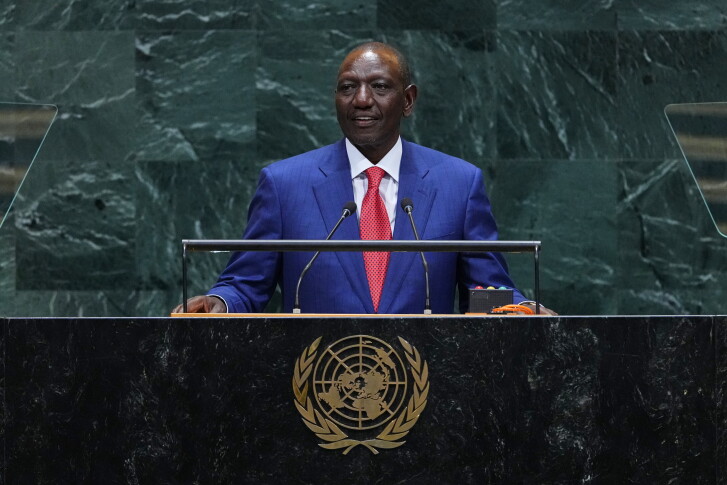

President William Ruto’s address to the 81st United Nations General Assembly in New York was built around a powerful question: Who really gets to decide the rules of the global economy?
But there is another question that follows him back to Kenya:
How does the Kenya described at the UN compare with the Kenya experienced by ordinary citizens?
In his September 23 address, Ruto presented Kenya as a country pushing for a fairer international system. He criticised the imbalance in global institutions, called for greater African representation in the UN Security Council and challenged the international financial system over the cost of borrowing for developing countries. He argued that Africa should have greater influence over decisions affecting its debt, development and economic future.
It was a speech about sovereignty, dignity, development and opportunity.
Yet back home, the conversation is much more immediate: food prices, transport costs, jobs, taxes, debt and household survival.
The biggest contrast: global debt versus Kenya's debt
Ruto told the UN that debt is increasingly consuming resources that developing countries need for hospitals, classrooms and development. His argument was that the international financial system needs to change because countries with the greatest development needs often face expensive financing.
That argument resonates beyond New York.
Kenya's own debt situation remains a major constraint. Treasury data cited in September put public and publicly guaranteed debt at about Sh13.12 trillion by June 2026, equivalent to roughly 68.5% of GDP. The World Bank also describes Kenya's public debt as elevated, with interest payments absorbing about one-third of government revenues.
So there is an interesting irony.
At the UN, Ruto was asking the world how developing countries can escape the debt trap. At home, Kenyans are watching closely to see how Kenya itself manages its debt burden.
The two arguments are not necessarily contradictory. A country can simultaneously argue that the global financial system is unfair and acknowledge that domestic fiscal choices matter.
But for the Kenyan taxpayer, the second part is often more visible.
The economy is growing but the cost of living tells another story
Ruto's UN speech focused heavily on development and economic transformation.
Kenya's economy has indeed continued to grow. The 2026 Economic Survey reported 4.6% real GDP growth in 2025, while total recorded employment outside small-scale agriculture rose to 21.6 million. But 87.2% of the 822,100 new jobs created in 2025 were in the informal sector.
That distinction matters.
GDP growth can look encouraging on a national chart while the experience of a household can remain difficult.
The latest KNBS figures available for August 2026 put annual inflation at 6.6%. Food and non-alcoholic beverages were up 9.0%, transport 15.7%, while housing, water, electricity, gas and other fuels rose 3.6% year-on-year.
For a Kenyan buying food, commuting to work and paying rent or electricity, these are not abstract economic indicators.
They are the economy.
Ruto spoke about opportunity. Kenya is still wrestling with jobs.
One of the strongest themes in Ruto's international messaging has been employment, investment and economic transformation.
His government has also launched programmes aimed at addressing youth employment. In July, the government, UNDP and KEPSA launched the KSh2 billion NextGen.Ke Youth Employment Programme, with a focus on connecting young people to work experience and practical skills.
But the broader employment picture remains complicated.
The African Development Bank estimated Kenya's unemployment at 13.9% in 2025, while also noting that many workers remain concentrated in informal and low-productivity activities.
This creates one of the central tensions between the speech and the street.
At the UN, Kenya is presented as an emerging economic and diplomatic voice. At home, millions of young people are still asking a much simpler question: Where is the job?
The speech was about changing the global system. Kenyans want to know about changing their daily reality.
Ruto's UN address was not primarily a defence of his domestic record. It was a diplomatic statement aimed at an international audience.
And on that stage, he positioned Kenya within a much bigger African argument: reform global institutions, give Africa a stronger voice, make development finance fairer and allow African countries to industrialise rather than remain consumers of imported products.
He also pointed to major ambitions such as the planned Lamu refinery project, describing industrialisation and value addition as part of the Africa Kenya wants to build.
But there is a gap between announcing transformation and making citizens feel transformation.
That gap is where the domestic debate lies.
Two Kenyas in one speech
Perhaps the most interesting way to understand Ruto's UN speech is to see the two different Kenyas it represents.
Kenya abroad:
A diplomatic power in Africa.
A voice for reform of global institutions.
A country seeking investment and industrialisation.
A champion of fairer development finance.
A country positioning itself in the digital and AI economy.
Kenya at home:
A country dealing with elevated public debt.
Households facing rising food and transport costs.
Young people competing for limited formal employment.
Businesses operating under economic pressure.
A government trying to balance development ambitions with fiscal constraints.
Neither picture tells the entire story.
The Kenyan economy is not collapsing; official data shows continued growth and expanding employment. But neither is economic growth automatically translating into broadly shared prosperity. The World Bank notes that poverty reduction has remained gradual and that limited formal job creation continues to constrain shared prosperity.
The real test begins after New York
Ruto's UN speech asked the world to rethink how power, debt and development are organised.
That is a legitimate international argument.
But speeches eventually return home.
The real political and economic test for the administration is whether the ideas spoken about in New York — investment, industrialisation, jobs, opportunity, fair financing and development — become increasingly visible in the lives of ordinary Kenyans.
Because for the farmer, the graduate, the boda boda rider, the small trader and the salaried worker, the most important international speech is ultimately measured in very local terms:
Can I afford food?
Can I find work?
Can I run my business?
Can I afford transport?
Can my children get a good education?
And is tomorrow likely to be better than today?
That is where the UN speech meets the state of the country.
And that is where the biggest conversation about Ruto's presidency is likely to continue.
But there is another question that follows him back to Kenya:
How does the Kenya described at the UN compare with the Kenya experienced by ordinary citizens?
In his September 23 address, Ruto presented Kenya as a country pushing for a fairer international system. He criticised the imbalance in global institutions, called for greater African representation in the UN Security Council and challenged the international financial system over the cost of borrowing for developing countries. He argued that Africa should have greater influence over decisions affecting its debt, development and economic future.
It was a speech about sovereignty, dignity, development and opportunity.
Yet back home, the conversation is much more immediate: food prices, transport costs, jobs, taxes, debt and household survival.
The biggest contrast: global debt versus Kenya's debt
Ruto told the UN that debt is increasingly consuming resources that developing countries need for hospitals, classrooms and development. His argument was that the international financial system needs to change because countries with the greatest development needs often face expensive financing.
That argument resonates beyond New York.
Kenya's own debt situation remains a major constraint. Treasury data cited in September put public and publicly guaranteed debt at about Sh13.12 trillion by June 2026, equivalent to roughly 68.5% of GDP. The World Bank also describes Kenya's public debt as elevated, with interest payments absorbing about one-third of government revenues.
So there is an interesting irony.
At the UN, Ruto was asking the world how developing countries can escape the debt trap. At home, Kenyans are watching closely to see how Kenya itself manages its debt burden.
The two arguments are not necessarily contradictory. A country can simultaneously argue that the global financial system is unfair and acknowledge that domestic fiscal choices matter.
But for the Kenyan taxpayer, the second part is often more visible.
The economy is growing but the cost of living tells another story
Ruto's UN speech focused heavily on development and economic transformation.
Kenya's economy has indeed continued to grow. The 2026 Economic Survey reported 4.6% real GDP growth in 2025, while total recorded employment outside small-scale agriculture rose to 21.6 million. But 87.2% of the 822,100 new jobs created in 2025 were in the informal sector.
That distinction matters.
GDP growth can look encouraging on a national chart while the experience of a household can remain difficult.
The latest KNBS figures available for August 2026 put annual inflation at 6.6%. Food and non-alcoholic beverages were up 9.0%, transport 15.7%, while housing, water, electricity, gas and other fuels rose 3.6% year-on-year.
For a Kenyan buying food, commuting to work and paying rent or electricity, these are not abstract economic indicators.
They are the economy.
Ruto spoke about opportunity. Kenya is still wrestling with jobs.
One of the strongest themes in Ruto's international messaging has been employment, investment and economic transformation.
His government has also launched programmes aimed at addressing youth employment. In July, the government, UNDP and KEPSA launched the KSh2 billion NextGen.Ke Youth Employment Programme, with a focus on connecting young people to work experience and practical skills.
But the broader employment picture remains complicated.
The African Development Bank estimated Kenya's unemployment at 13.9% in 2025, while also noting that many workers remain concentrated in informal and low-productivity activities.
This creates one of the central tensions between the speech and the street.
At the UN, Kenya is presented as an emerging economic and diplomatic voice. At home, millions of young people are still asking a much simpler question: Where is the job?
The speech was about changing the global system. Kenyans want to know about changing their daily reality.
Ruto's UN address was not primarily a defence of his domestic record. It was a diplomatic statement aimed at an international audience.
And on that stage, he positioned Kenya within a much bigger African argument: reform global institutions, give Africa a stronger voice, make development finance fairer and allow African countries to industrialise rather than remain consumers of imported products.
He also pointed to major ambitions such as the planned Lamu refinery project, describing industrialisation and value addition as part of the Africa Kenya wants to build.
But there is a gap between announcing transformation and making citizens feel transformation.
That gap is where the domestic debate lies.
Two Kenyas in one speech
Perhaps the most interesting way to understand Ruto's UN speech is to see the two different Kenyas it represents.
Kenya abroad:
A diplomatic power in Africa.
A voice for reform of global institutions.
A country seeking investment and industrialisation.
A champion of fairer development finance.
A country positioning itself in the digital and AI economy.
Kenya at home:
A country dealing with elevated public debt.
Households facing rising food and transport costs.
Young people competing for limited formal employment.
Businesses operating under economic pressure.
A government trying to balance development ambitions with fiscal constraints.
Neither picture tells the entire story.
The Kenyan economy is not collapsing; official data shows continued growth and expanding employment. But neither is economic growth automatically translating into broadly shared prosperity. The World Bank notes that poverty reduction has remained gradual and that limited formal job creation continues to constrain shared prosperity.
The real test begins after New York
Ruto's UN speech asked the world to rethink how power, debt and development are organised.
That is a legitimate international argument.
But speeches eventually return home.
The real political and economic test for the administration is whether the ideas spoken about in New York — investment, industrialisation, jobs, opportunity, fair financing and development — become increasingly visible in the lives of ordinary Kenyans.
Because for the farmer, the graduate, the boda boda rider, the small trader and the salaried worker, the most important international speech is ultimately measured in very local terms:
Can I afford food?
Can I find work?
Can I run my business?
Can I afford transport?
Can my children get a good education?
And is tomorrow likely to be better than today?
That is where the UN speech meets the state of the country.
And that is where the biggest conversation about Ruto's presidency is likely to continue.