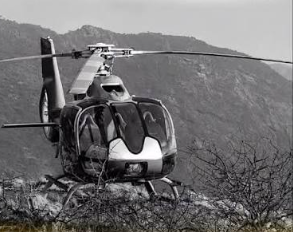
A luxury safari in northern Kenya ended in tragedy on Wednesday, August 19, after a helicopter crashed near the foothills of Mount Ololokwe in Samburu County, killing all seven people on board.
The Eurocopter EC130 B4, registration 5Y-GYM, was operated by Lady Lori Helicopters and was carrying six passengers and a pilot. Kenya's Civil Aviation Authority confirmed that the aircraft was conducting a flight toward the Ewaso Nyiro area when it crashed at approximately 9:13 a.m.
The crash has drawn international attention because of the identities of those on board. Among the dead was Michele Sensi-Contugi, Ecuador's intelligence chief, alongside his wife, Stephany Hollihan. Five of the seven victims were American citizens.
A safari flight that never reached its destination
The helicopter was carrying guests travelling with luxury safari company &Beyond. Reports differ slightly on the precise departure point, with some accounts identifying the Loisaba Conservancy, while others have referred to the Suyian area. KCAA's account states that the aircraft was flying from Loisaba to Ewaso Nyiro when the accident occurred.
The flight was taking place in one of Kenya's most spectacular but geographically challenging tourism landscapes.
Mount Ololokwe rises dramatically from the Samburu landscape and is an important attraction for visitors exploring northern Kenya. The same rugged terrain that makes the region extraordinary for tourism, however, can make aviation emergencies particularly difficult for rescuers.
The crash site was described as remote and difficult to access, with fire and smoke further complicating recovery efforts. Emergency teams, including the Kenya Red Cross and aviation rescue personnel, were involved in the response.
The seven people who died
The victims included prominent figures from business, media and public service.
Among them was Michele Sensi-Contugi, 44, director-general of Ecuador's Strategic Intelligence Center. His wife, Stephany Hollihan, who held U.S. and Ecuadorian citizenship, also died in the crash. Ecuador's government expressed condolences following the death of the senior intelligence official.
Another victim was José Alberto Suárez, a senior Telemundo executive in Florida who had held leadership positions at several NBC and Telemundo stations. His death was confirmed among the seven victims.
Roger Duarte, a Miami-based entrepreneur and food-industry figure associated with businesses including George Stone Crab and My Ceviche, was also killed.
The other victims were identified in reports as Adam Hlavaty, Henry Parra and pilot Josh Outram. All seven occupants died.
Behind those prominent names, however, is a more basic human tragedy: seven people who left for what was supposed to be a safari experience in Kenya never returned home.
The investigation begins
The immediate focus now shifts from rescue to investigation.
The Kenya Civil Aviation Authority has launched an investigation, with Kenya's Air Accident Investigation Department expected to establish what caused the aircraft to go down. At this stage, there is no confirmed public explanation for the cause of the crash.
That distinction is important.
Aviation accidents can result from a combination of factors including weather, terrain, mechanical failure, human factors, flight operations or maintenance and investigators generally need to examine aircraft wreckage, maintenance records, flight data, weather conditions, pilot qualifications and operational procedures before drawing conclusions.
Until that process is completed, speculation about what caused the helicopter to crash risks turning an unfolding investigation into a collection of unverified theories.
Why the crash matters beyond the seven victims
The tragedy also raises wider questions about Kenya's growing dependence on aviation within the luxury tourism sector.
Helicopters have become an important part of high-end safari tourism. They allow visitors to move quickly between remote conservancies, lodges and wildlife destinations that would otherwise require long road journeys.
For tourists paying premium prices for exclusive experiences, the helicopter is often part of the attraction itself.
But operating aircraft in remote wilderness areas presents unique challenges.
Northern Kenya combines rugged mountains, vast distances, limited road access and rapidly changing environmental conditions. When an aircraft encounters trouble in such an environment, the distance between an accident site and medical or emergency infrastructure can become a critical factor.
The Mt Ololokwe crash therefore presents an opportunity for authorities and tourism operators to examine not only what happened to this particular aircraft, but also the broader safety systems supporting charter and safari aviation.
A test for Kenya's aviation safety culture
Kenya has a strong tourism brand built around wildlife, landscapes and hospitality. Aviation is increasingly intertwined with that brand, particularly in destinations where tourists move between conservancies by air.
That makes aviation safety more than an industry issue. It is also a tourism issue.
Every international visitor who boards a charter aircraft in Kenya places their trust in the country's pilots, operators, regulators and emergency-response systems.
The investigation into the Ololokwe crash must therefore be transparent and technically rigorous.
Questions about the helicopter's maintenance history, the operator's safety record, the pilot's qualifications and duty hours, the weather and visibility at the time, the aircraft's flight path, and any mechanical or operational abnormalities will ultimately need to be answered through evidence.
Most importantly, the investigation should not stop at identifying a proximate cause. If shortcomings are found, they should translate into corrective measures.
The human cost behind the headlines
The international prominence of some of the victims has understandably attracted global attention. Ecuador has lost a senior intelligence official. The American media and business communities are mourning colleagues and friends. The aviation industry is mourning a pilot.
But the tragedy should not be reduced to the titles held by those who died.
For families, seven people are simply seven loved ones who are no longer coming home.
For Kenya, the crash is another reminder that tourism is not merely about beautiful landscapes and premium experiences. It is also about the systems that make those experiences safe.
Mount Ololokwe remains standing over the Samburu landscape, as it has for generations. What happened beneath its slopes on Wednesday morning will now become part of the mountain's history and part of Kenya's aviation safety record.
The investigation will determine how and why the helicopter came down.
For now, the only certainty is the most painful one: seven people boarded a helicopter for a safari flight, and none survived.
Kenya mourns with the families, friends, colleagues and countries affected by the tragedy.
May they rest in peace.
The Eurocopter EC130 B4, registration 5Y-GYM, was operated by Lady Lori Helicopters and was carrying six passengers and a pilot. Kenya's Civil Aviation Authority confirmed that the aircraft was conducting a flight toward the Ewaso Nyiro area when it crashed at approximately 9:13 a.m.
The crash has drawn international attention because of the identities of those on board. Among the dead was Michele Sensi-Contugi, Ecuador's intelligence chief, alongside his wife, Stephany Hollihan. Five of the seven victims were American citizens.
A safari flight that never reached its destination
The helicopter was carrying guests travelling with luxury safari company &Beyond. Reports differ slightly on the precise departure point, with some accounts identifying the Loisaba Conservancy, while others have referred to the Suyian area. KCAA's account states that the aircraft was flying from Loisaba to Ewaso Nyiro when the accident occurred.
The flight was taking place in one of Kenya's most spectacular but geographically challenging tourism landscapes.
Mount Ololokwe rises dramatically from the Samburu landscape and is an important attraction for visitors exploring northern Kenya. The same rugged terrain that makes the region extraordinary for tourism, however, can make aviation emergencies particularly difficult for rescuers.
The crash site was described as remote and difficult to access, with fire and smoke further complicating recovery efforts. Emergency teams, including the Kenya Red Cross and aviation rescue personnel, were involved in the response.
The seven people who died
The victims included prominent figures from business, media and public service.
Among them was Michele Sensi-Contugi, 44, director-general of Ecuador's Strategic Intelligence Center. His wife, Stephany Hollihan, who held U.S. and Ecuadorian citizenship, also died in the crash. Ecuador's government expressed condolences following the death of the senior intelligence official.
Another victim was José Alberto Suárez, a senior Telemundo executive in Florida who had held leadership positions at several NBC and Telemundo stations. His death was confirmed among the seven victims.
Roger Duarte, a Miami-based entrepreneur and food-industry figure associated with businesses including George Stone Crab and My Ceviche, was also killed.
The other victims were identified in reports as Adam Hlavaty, Henry Parra and pilot Josh Outram. All seven occupants died.
Behind those prominent names, however, is a more basic human tragedy: seven people who left for what was supposed to be a safari experience in Kenya never returned home.
The investigation begins
The immediate focus now shifts from rescue to investigation.
The Kenya Civil Aviation Authority has launched an investigation, with Kenya's Air Accident Investigation Department expected to establish what caused the aircraft to go down. At this stage, there is no confirmed public explanation for the cause of the crash.
That distinction is important.
Aviation accidents can result from a combination of factors including weather, terrain, mechanical failure, human factors, flight operations or maintenance and investigators generally need to examine aircraft wreckage, maintenance records, flight data, weather conditions, pilot qualifications and operational procedures before drawing conclusions.
Until that process is completed, speculation about what caused the helicopter to crash risks turning an unfolding investigation into a collection of unverified theories.
Why the crash matters beyond the seven victims
The tragedy also raises wider questions about Kenya's growing dependence on aviation within the luxury tourism sector.
Helicopters have become an important part of high-end safari tourism. They allow visitors to move quickly between remote conservancies, lodges and wildlife destinations that would otherwise require long road journeys.
For tourists paying premium prices for exclusive experiences, the helicopter is often part of the attraction itself.
But operating aircraft in remote wilderness areas presents unique challenges.
Northern Kenya combines rugged mountains, vast distances, limited road access and rapidly changing environmental conditions. When an aircraft encounters trouble in such an environment, the distance between an accident site and medical or emergency infrastructure can become a critical factor.
The Mt Ololokwe crash therefore presents an opportunity for authorities and tourism operators to examine not only what happened to this particular aircraft, but also the broader safety systems supporting charter and safari aviation.
A test for Kenya's aviation safety culture
Kenya has a strong tourism brand built around wildlife, landscapes and hospitality. Aviation is increasingly intertwined with that brand, particularly in destinations where tourists move between conservancies by air.
That makes aviation safety more than an industry issue. It is also a tourism issue.
Every international visitor who boards a charter aircraft in Kenya places their trust in the country's pilots, operators, regulators and emergency-response systems.
The investigation into the Ololokwe crash must therefore be transparent and technically rigorous.
Questions about the helicopter's maintenance history, the operator's safety record, the pilot's qualifications and duty hours, the weather and visibility at the time, the aircraft's flight path, and any mechanical or operational abnormalities will ultimately need to be answered through evidence.
Most importantly, the investigation should not stop at identifying a proximate cause. If shortcomings are found, they should translate into corrective measures.
The human cost behind the headlines
The international prominence of some of the victims has understandably attracted global attention. Ecuador has lost a senior intelligence official. The American media and business communities are mourning colleagues and friends. The aviation industry is mourning a pilot.
But the tragedy should not be reduced to the titles held by those who died.
For families, seven people are simply seven loved ones who are no longer coming home.
For Kenya, the crash is another reminder that tourism is not merely about beautiful landscapes and premium experiences. It is also about the systems that make those experiences safe.
Mount Ololokwe remains standing over the Samburu landscape, as it has for generations. What happened beneath its slopes on Wednesday morning will now become part of the mountain's history and part of Kenya's aviation safety record.
The investigation will determine how and why the helicopter came down.
For now, the only certainty is the most painful one: seven people boarded a helicopter for a safari flight, and none survived.
Kenya mourns with the families, friends, colleagues and countries affected by the tragedy.
May they rest in peace.