If the government belongs to the people, how do political parties negotiate percentages of it? And when leaders talk about having shares in government, what exactly are they sharing?
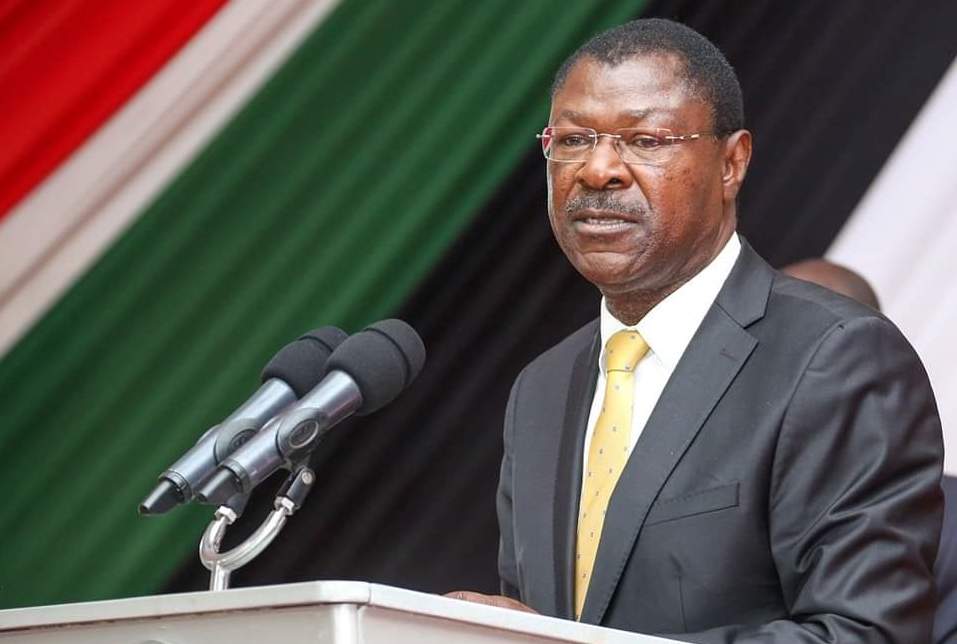
A question that has been lingering in the minds of many Kenyans following the discussion around National Assembly Speaker Moses Wetangula and the 30% shareholding arrangement is a rather simple one: How does someone own shares in a government?
To an ordinary Kenyan, the idea sounds unusual. We understand shares in banks, telecommunications companies, factories and other private businesses. You invest money, acquire a percentage of ownership and potentially earn dividends or exercise voting rights.
But government?
Does that mean someone can own 30% of a ministry, a parastatal or a government institution? Can political parties become shareholders in institutions funded by taxpayers?
To understand the debate, we need to look beyond the word *shareholding*.
Where did the 30% come from?
The discussion is not entirely new. It goes back to the Kenya Kwanza coalition agreement signed in 2022 between UDA, Amani National Congress (ANC) and FORD Kenya.
Article 21(n) of the agreement provided for ANC and FORD Kenya to receive a combined 30% share of national government positions, to be divided equally between the two parties.
These positions included Cabinet Secretaries, Principal Secretaries, ambassadors, heads of diplomatic missions, chairpersons and directors of state corporations, as well as positions in constitutional commissions.
The arrangement became a subject of national debate during the October 2024 impeachment proceedings against former Deputy President Rigathi Gachagua, when he referred to the concept of political shareholding in defending his statements about government power-sharing.
The issue was also discussed in Parliament, where the distinction between political shareholding and ownership of a company became particularly important.
In other words, the agreement was about sharing government positions, not giving political parties actual ownership of 30% of government assets.
So, how can political parties have shares in government?
Here is where the language becomes important.
In political negotiations, the word *share* can refer to an agreed proportion of appointments, leadership positions or responsibilities within a coalition government.
For example, three political parties form a coalition and agree that one party will nominate the President, another will receive certain leadership positions, while the remaining party will receive an agreed proportion of public appointments.
This is political power-sharing.
It does not mean that the parties own the government in the same way shareholders own a company.
However, the arrangement raises another important question: How should these political agreements translate into actual public appointments?
A coalition agreement cannot automatically override the Constitution, statutory requirements or established appointment procedures.
But who actually owns government institutions?
The Kenyan government is not a private business owned by political parties or individual politicians.
Under the Constitution, sovereign power belongs to the people of Kenya. Public institutions exercise authority under the Constitution and the law, and public resources must be managed in the public interest.
State corporations may have shares held by the national government or other public entities. Their ownership structures are governed by the laws and instruments establishing them.
A politician appointed to lead a state corporation does not automatically become its shareholder.
Similarly, a political party negotiating a percentage of public appointments does not acquire an equity stake in the institutions where its nominees may eventually serve.
This distinction matters because leadership, ownership and political influence are three different things.
The question of merit versus political entitlement
There is another side to this conversation that deserves attention.
Political coalitions are formed through negotiations. Parties contribute votes, political support and organisational structures, and they may negotiate representation in a government they help form.
That is not unusual in coalition politics.
However, public appointments are not simply political rewards. They involve institutions that manage public funds, deliver essential services and make decisions affecting millions of citizens.
Consider a government water corporation, a public hospital, an environmental agency or an infrastructure institution.
Should the person appointed to lead such an institution primarily represent a political party's interests, or should the appointment prioritise competence, integrity, qualifications and the institution's mandate?
Political representation and professional competence do not necessarily have to be mutually exclusive. But the process must protect the public interest.
And where does the ordinary Kenyan fit in?
This is perhaps the most important part of the debate.
Kenyans go to work, pay taxes, contribute to the economy and depend on public institutions for services. They expect government appointments to translate into better healthcare, reliable water supply, improved infrastructure, employment opportunities and accountable public services.
When political leaders negotiate percentages of government positions, citizens deserve to understand what those negotiations mean for service delivery.
If a political party receives a percentage of appointments, what measurable benefit does that arrangement bring to the public?
Does it improve representation? Does it strengthen national cohesion? Does it improve institutional performance?
Or does it simply become another conversation about how political power is distributed among the people at the negotiating table?
These are legitimate questions that should not be dismissed as political hostility.
Perhaps we need to change how we understand political shareholding.
There is nothing inherently wrong with coalition-building or negotiating political representation. In a multiparty democracy, such arrangements can help different political interests participate in government.
But there is a difference between sharing political responsibility and treating public institutions as political property.
The government is not a family business. Public appointments are not dividends. And government agencies are not private companies belonging to the parties that helped form an administration.
The ultimate shareholders in Kenya's democracy are the citizens, not because they own tradable shares in ministries, but because sovereign power belongs to them.
Perhaps the question Kenyans should be asking is not simply who gets 30% of government positions, but what Kenyans get in return.
Because at the end of the day, political parties may negotiate power, leaders may negotiate appointments, but the public should never lose sight of who government is supposed to serve.
The government belongs to the people. Its institutions must work for the people.