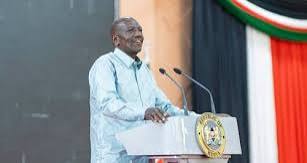
Will William Ruto become Kenya’s first one-term president?
That question is no longer just opposition rhetoric. With exactly one year to the 2027 General Election, it has become one of the central questions hanging over Kenya’s political landscape.
The President has a constitutional right to seek a second term. But having the right to run and actually winning are two very different things.
And that is where the 2027 contest becomes interesting.
Ruto is behaving like a president who wants a second term
If President William Ruto were preparing to leave State House after one term, his political actions would be difficult to explain.
On August 10, 2026, during the UDA-ODM parliamentary retreat in Naivasha, Ruto told members of the broad-based government that **“we must win” the 2027 General Election**. The meeting was explicitly focused on assessing the broad-based arrangement and preparing for the next election.
That is not the language of a politician preparing his farewell.
It is the language of an incumbent building an electoral machine.
His allies are even more explicit.
Deputy President Kithure Kindiki has already spoken of supporting Ruto for a second term, while South Mugirango MP Sylvanus Osoro has declared that Ruto will not become Kenya's first one-term president.
The political machinery therefore appears to be preparing for **Ruto 2027**, not Ruto's retirement.
But politics is rarely that simple.
The one-term argument refuses to die
The opposition's dream is straightforward:
Make Ruto a one-term president.
That would be politically significant.
Kenya has never had a president elected to State House who subsequently failed to secure a second term when eligible to contest.
A Ruto defeat in 2027 would therefore represent more than a change of government.
It would establish a powerful precedent:
Winning the presidency in Kenya does not guarantee political survival beyond five years.
The opposition knows this.
And that is why “one term” has become more than a slogan. It is becoming a political objective.
The real battlefield is the voter
Ruto's broad-based government is arguably his biggest political weapon going into 2027.
The UDA-ODM arrangement has brought together a large parliamentary and political coalition. Ruto has described it as Kenya's largest political formation since the grand coalition government that followed the 2007–08 crisis.
If that coalition holds, it gives Ruto something every presidential candidate wants:
national reach.
But national political alliances do not automatically translate into votes.
Kenyan elections are ultimately decided at the polling station.
A politician can have hundreds of MPs behind him and still face angry voters.
That is the danger for Ruto.
The economy will probably matter more than the rallies
Ruto's 2027 campaign will inevitably become a referendum on his first term.
His government will point to infrastructure, development projects, digitalisation, healthcare reforms, housing and other programmes.
The opposition will point to the cost of living, taxation, unemployment, public debt and the frustrations of young Kenyans.
And somewhere between those two narratives is the ordinary voter.
The question will be brutally simple:
“Am I better off than I was in 2022?”
That answer could matter more than the number of political leaders standing on a stage with Ruto.
Then there is Gen Z
Perhaps the biggest uncertainty in this election is the youth vote.
Kenya's young population has already demonstrated that it can disrupt political assumptions.
The 2024 Gen Z protests changed the national conversation around taxation, accountability and the relationship between citizens and government.
The question now is whether that energy will translate into the ballot box in 2027.
If young voters who are dissatisfied with the government actually register, turn out and vote as a bloc or even in large numbers against the incumbent, the one-term argument suddenly becomes much more credible.
But there is another possibility.
Political anger on social media does not automatically equal electoral mobilization.
A candidate can be extremely unpopular online and still win an election.
That is why the 2027 turnout among young Kenyans could be decisive.
Mt Kenya remains another major question
Former Deputy President Rigathi Gachagua has made the Mt Kenya vote one of the most important fronts in the battle.
His political strategy appears aimed at convincing the region that Ruto betrayed the political understanding that brought the two men to power in 2022.
Ruto's strategy, meanwhile, is increasingly about rebuilding his support across the region while expanding his coalition elsewhere.
If Ruto loses substantial support in Mt Kenya, he will need to compensate elsewhere.
That is partly why the relationship with ODM and the search for support in Western Kenya, Nyanza and other regions is so politically important.
The arithmetic of 2027 may be completely different from that of 2022.
The opposition has one major advantage and one major weakness
Its advantage is obvious:
It does not have to defend the record of the government.
It can campaign against the incumbent.
Its weakness is equally obvious:
Who will unite it?
A divided opposition can make Ruto's path to a second term significantly easier.
Recent political manoeuvring shows that opposition leaders are still attempting to determine who should lead the challenge to the President. Meanwhile, Ruto's broad-based alliance is trying to consolidate itself before the election.
If the opposition enters 2027 with several presidential candidates splitting the anti-Ruto vote, the “one-term” campaign could collapse under its own weight.
If it manages to unite behind a credible candidate with a strong national coalition, the calculation changes dramatically.
So, will it be one term?
It is too early to say.
But one thing is becoming increasingly clear:
Ruto himself does not appear to be preparing for a one-term presidency.
His political allies are campaigning for his second term. His broad-based government is organizing for 2027. His administration is presenting its record to voters. And the President is openly telling his political partners that they must win the next election.
The question therefore shifts.
It is no longer:
“Will Ruto get a second term?”
The real question is:
“Will Kenyans give him one?”
That will depend on three things: the economy, the opposition and the voter.
If the opposition remains divided, Ruto's broad-based coalition could prove difficult to defeat.
If the cost-of-living crisis and youth dissatisfaction dominate the campaign, the one-term argument could become powerful.
And if an opposition candidate manages to unite the anti-Ruto vote across regions and generations, Kenya could witness something it has never experienced before.
A president elected once and rejected by voters five years later.
One year from now, the question will no longer be theoretical.
It will be on the ballot.
And when Kenyans walk into polling stations in 2027, they will effectively be answering one question:
Five more years or one term is enough?
That question is no longer just opposition rhetoric. With exactly one year to the 2027 General Election, it has become one of the central questions hanging over Kenya’s political landscape.
The President has a constitutional right to seek a second term. But having the right to run and actually winning are two very different things.
And that is where the 2027 contest becomes interesting.
Ruto is behaving like a president who wants a second term
If President William Ruto were preparing to leave State House after one term, his political actions would be difficult to explain.
On August 10, 2026, during the UDA-ODM parliamentary retreat in Naivasha, Ruto told members of the broad-based government that **“we must win” the 2027 General Election**. The meeting was explicitly focused on assessing the broad-based arrangement and preparing for the next election.
That is not the language of a politician preparing his farewell.
It is the language of an incumbent building an electoral machine.
His allies are even more explicit.
Deputy President Kithure Kindiki has already spoken of supporting Ruto for a second term, while South Mugirango MP Sylvanus Osoro has declared that Ruto will not become Kenya's first one-term president.
The political machinery therefore appears to be preparing for **Ruto 2027**, not Ruto's retirement.
But politics is rarely that simple.
The one-term argument refuses to die
The opposition's dream is straightforward:
Make Ruto a one-term president.
That would be politically significant.
Kenya has never had a president elected to State House who subsequently failed to secure a second term when eligible to contest.
A Ruto defeat in 2027 would therefore represent more than a change of government.
It would establish a powerful precedent:
Winning the presidency in Kenya does not guarantee political survival beyond five years.
The opposition knows this.
And that is why “one term” has become more than a slogan. It is becoming a political objective.
The real battlefield is the voter
Ruto's broad-based government is arguably his biggest political weapon going into 2027.
The UDA-ODM arrangement has brought together a large parliamentary and political coalition. Ruto has described it as Kenya's largest political formation since the grand coalition government that followed the 2007–08 crisis.
If that coalition holds, it gives Ruto something every presidential candidate wants:
national reach.
But national political alliances do not automatically translate into votes.
Kenyan elections are ultimately decided at the polling station.
A politician can have hundreds of MPs behind him and still face angry voters.
That is the danger for Ruto.
The economy will probably matter more than the rallies
Ruto's 2027 campaign will inevitably become a referendum on his first term.
His government will point to infrastructure, development projects, digitalisation, healthcare reforms, housing and other programmes.
The opposition will point to the cost of living, taxation, unemployment, public debt and the frustrations of young Kenyans.
And somewhere between those two narratives is the ordinary voter.
The question will be brutally simple:
“Am I better off than I was in 2022?”
That answer could matter more than the number of political leaders standing on a stage with Ruto.
Then there is Gen Z
Perhaps the biggest uncertainty in this election is the youth vote.
Kenya's young population has already demonstrated that it can disrupt political assumptions.
The 2024 Gen Z protests changed the national conversation around taxation, accountability and the relationship between citizens and government.
The question now is whether that energy will translate into the ballot box in 2027.
If young voters who are dissatisfied with the government actually register, turn out and vote as a bloc or even in large numbers against the incumbent, the one-term argument suddenly becomes much more credible.
But there is another possibility.
Political anger on social media does not automatically equal electoral mobilization.
A candidate can be extremely unpopular online and still win an election.
That is why the 2027 turnout among young Kenyans could be decisive.
Mt Kenya remains another major question
Former Deputy President Rigathi Gachagua has made the Mt Kenya vote one of the most important fronts in the battle.
His political strategy appears aimed at convincing the region that Ruto betrayed the political understanding that brought the two men to power in 2022.
Ruto's strategy, meanwhile, is increasingly about rebuilding his support across the region while expanding his coalition elsewhere.
If Ruto loses substantial support in Mt Kenya, he will need to compensate elsewhere.
That is partly why the relationship with ODM and the search for support in Western Kenya, Nyanza and other regions is so politically important.
The arithmetic of 2027 may be completely different from that of 2022.
The opposition has one major advantage and one major weakness
Its advantage is obvious:
It does not have to defend the record of the government.
It can campaign against the incumbent.
Its weakness is equally obvious:
Who will unite it?
A divided opposition can make Ruto's path to a second term significantly easier.
Recent political manoeuvring shows that opposition leaders are still attempting to determine who should lead the challenge to the President. Meanwhile, Ruto's broad-based alliance is trying to consolidate itself before the election.
If the opposition enters 2027 with several presidential candidates splitting the anti-Ruto vote, the “one-term” campaign could collapse under its own weight.
If it manages to unite behind a credible candidate with a strong national coalition, the calculation changes dramatically.
So, will it be one term?
It is too early to say.
But one thing is becoming increasingly clear:
Ruto himself does not appear to be preparing for a one-term presidency.
His political allies are campaigning for his second term. His broad-based government is organizing for 2027. His administration is presenting its record to voters. And the President is openly telling his political partners that they must win the next election.
The question therefore shifts.
It is no longer:
“Will Ruto get a second term?”
The real question is:
“Will Kenyans give him one?”
That will depend on three things: the economy, the opposition and the voter.
If the opposition remains divided, Ruto's broad-based coalition could prove difficult to defeat.
If the cost-of-living crisis and youth dissatisfaction dominate the campaign, the one-term argument could become powerful.
And if an opposition candidate manages to unite the anti-Ruto vote across regions and generations, Kenya could witness something it has never experienced before.
A president elected once and rejected by voters five years later.
One year from now, the question will no longer be theoretical.
It will be on the ballot.
And when Kenyans walk into polling stations in 2027, they will effectively be answering one question:
Five more years or one term is enough?