
Thousands gather in commemoration of Mashujaa day at the Kipchoge Keino stadium in Eldoret city.

Kenya's latest fuel-price increase has raised concerns about the rising cost of living. Effective October 15, 2026, Nairobi's super petrol price rose to KSh 226.96 per litre, diesel to KSh 227.76, and kerosene to KSh 219.87, according to EPRA. The increase, linked partly to rising international petroleum import costs amid Middle East tensions, could push up transport fares, food prices and business operating expenses, placing additional pressure on households already struggling financially. While temporary government interventions may offer relief, Kenya needs long-term solutions, including investment in renewable energy, electric public transport, energy efficiency and greater transparency in fuel pricing. The big question remains: How can Kenya protect its citizens from rising global fuel costs while building a more affordable and energy-secure future?
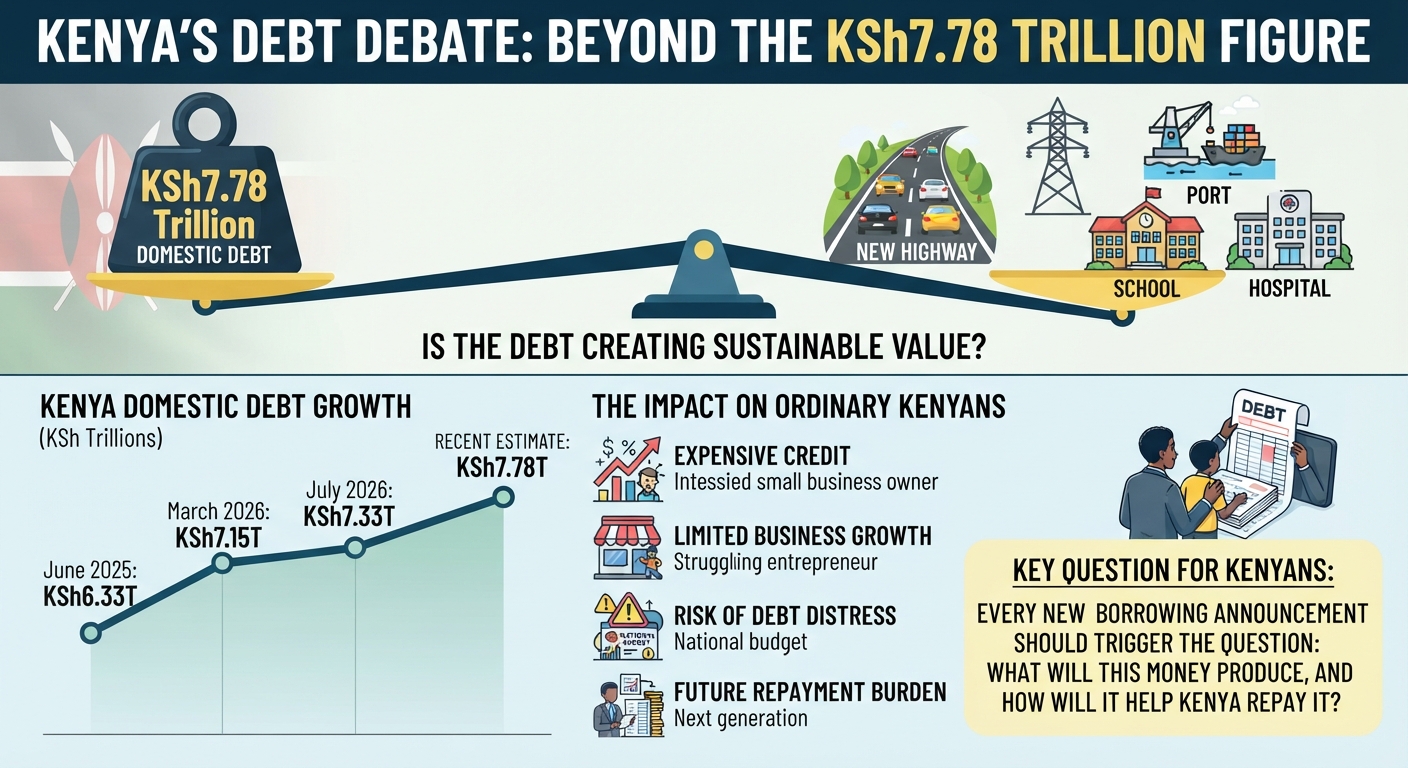
Kenya’s rising domestic debt is becoming a major economic concern, with the figure reportedly approaching KSh7.78 trillion. The issue is not simply how much Kenya is borrowing, but what the borrowed money is being used for. Borrowing can support development when invested in infrastructure, businesses, jobs and productive sectors, but excessive borrowing to finance recurrent expenses can increase pressure on taxpayers and future generations. The bigger question for Kenyans is simple: If the debt keeps rising, what are we getting in return?